Skip to content

SpainSpainVisited Mar 2025 · 1 month

Madrid

The wettest month in the capital's history.

Top ratedRemote work hubGreat for a holidayWould return
Average7.3
Accommodation4.8
Coworking8.6
Value7.6
Excitement8.2
Living costs, excl. rent~$1,764
Mild and dry
JFMAMJJASONDMild and dry: Apr, May, Oct, Nov
Nomad visaAvailable
Population3.2 million
Fly into

MAD

A city at the heart of the Spanish-speaking world.

More than Spain's geographical and cultural centre, Madrid is an international hub connecting much of the Hispanic world across an energetic selection of tapas bars, expansive green parks and consistently bustling streets.

Strongly recommend

Expensive accomodation is the only real negative in what is one of Europe's best bets for a remote work trip. Energetic, fun and with (usually) enviable weather.

At a glance

Accommodation

Ok · #58 of 62

4.8/10

Limited housing stock combined with high demand means uncovering a great deal is always going to be unlikely in Madrid, especially as a visitor.

Accommodation across the city is expensive. Expect to pay close to €2,000 for an unremarkable one-bed apartment on Airbnb somewhere close to the centre.

These prices aren't necessarily too much higher than what you might expect for a major Western European city, but are far higher than what you would expect from more conventional remote work hotspots.

I was fortunate enough to sublet an apartment from a colleague, which significantly reduced the cost, but even with that considered, the month spent in Madrid was comfortably the most I spent on accommodation throughout this whole period of working remotely.

Even off Airbnb, conventional rental prices are considered high in the city, with rents frequently consuming up to 50% of locals' salaries. With this in mind, your best bet at finding decent value for money is probably going to come via subletting a Madrileño's flat or via a house swap with someone who may be more incentivised to seek someone to cover their rent than in other cities.

If you're willing to opt for a room in a house, you can find a room in a central area for around €700 via Airbnb.
How it compares

Coworking

Great · #8 of 62

8.6/10

With four WeWork locations and numerous independent operators dispersed across the city, you won't struggle to find places to work. The WeWork sites aren't remarkable and fall short compared to some of the other sites across Europe but provide reliable, consistent options.

Value

Good · #32 of 62

7.6/10

Accommodation aside, Madrid felt like reasonable value for a major European capital. There's a number of places where you can pick up a quick dinner for under €10 and the price of drinks in bars and cafés is significantly cheaper than what you'd expect to find in, say, London. Expect to pay as little as €3 for a copa de vino or a cerveza doble, often accompanied by a small tapas item.

Madrid is by no means inexpensive, but you feel like you get more for your money than in comparable cities on the continent. A month-long gym pass was €30 with no long-term commitment, metro rides even out to around €1 when purchasing in bulk, taxi prices feel fair and coffee shops are roughly 25% less than what you may expect in London.

Excitement

Great · #13 of 62

8.2/10

Madrid has an infectiously fun feel to it. Walk in any direction and you'll inevitably pass crowds swarming around tapas bars and people drinking beers in outdoor plazas as soon as they've finished their morning coffees.

Expect to see fans packing into bars to watch two of Europe's largest teams, Real and Atletico Madrid, playing throughout the week. On your morning commute, it's not uncommon to see people just finishing their activities from the previous night, clinging to their last bottle of Mahou to accompany the sunrise.

Whatever you're looking for in a city's nightlife, you will no doubt find it in Madrid. But it balances this fun whilst being a major centre of trade and commerce in Europe, making it somewhere with a continuous ambience throughout the entire week and with plenty of outdoor spaces to unwind.

How it compares

Plan

Summary

I had a month to spend in Europe prior to returning to the UK for a wedding and on paper Madrid ticked all the boxes - reliable spring time sun, a fun lively atmosphere and better value day to day living than the UK. Only two out of the three proved to be correct.

Malasaña felt like one of the best neighbourhoods in the city to base yourself whilst balancing convenience and amenities on your doorstep. Expect countless bars, restaurants, quirky vintage clothing shops, comic book stores and anything else you may want to pass your time over the weekend.

Cost of living

$1,764a month, before rent

Basic living costs, rent not included

Day-to-day spending for a month: two meals out and a coffee every day, three taxis and two nights out a week, a gym and a coworking desk. Add your rent on top.

Moderate
  • Meal in a casual restaurant$17
  • Speciality coffee$3.94
  • Pint of local beer$5.29
  • Cocktail$19
  • Taxi for 2 miles$7.88
  • Men's haircut$19
  • Women's haircut$48
  • Gym membership, monthly$53
  • Coworking, monthly$225

Prices as of Oct 2026. Confidence: medium. Sources: diario.madrid.es, madridtourism.org, workin.space, livingcost.org, treatwell.es, basic-fit.com. Always check locally before planning around them.

Duration & season

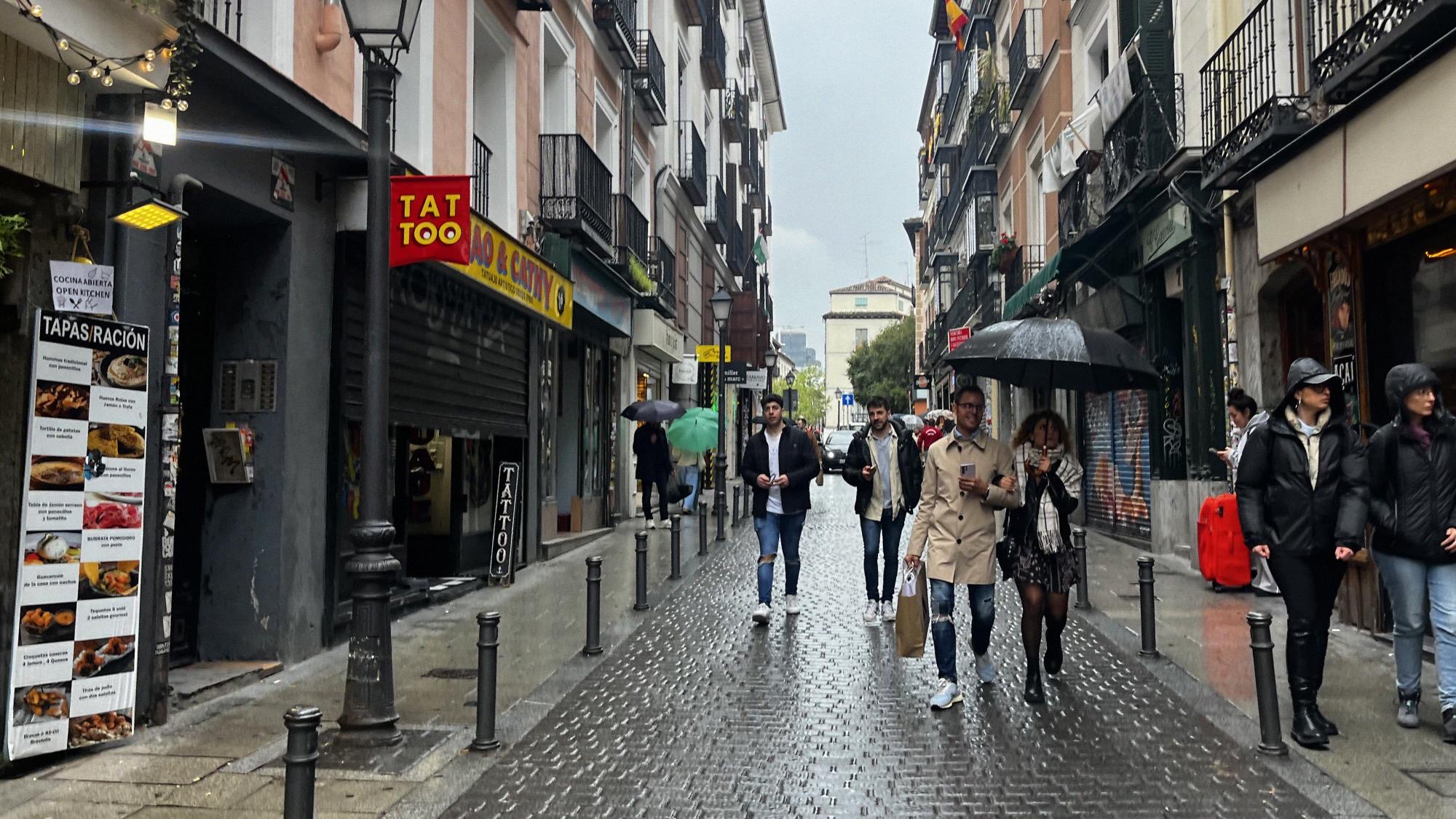
In comedically ironic fashion, my visit coincided with March 2025, which was the wettest month recorded in Madrid since records began in 1893. Rainfall was persistent, the clouds continuously menacing and you would be foolish to leave the house for any period of time without the safety of an umbrella.

By all accounts this was something of an anomaly. The city is generally blessed with dry, sunny weather across the year. The peak summer months are generally regarded as too hot, with locals often leaving the city to escape the 30 degrees+ temperatures.

Unless you're actively seeking the heat, you're better off visiting either side of the height of summer, where you can make the most of the city's green spaces without the heat being overly burdensome.

A month is a perfect period of time to be in the city and perhaps the minimum required to get a real feel for all areas.

By month

Typical temperatures and rainfall by month
MonthLow °CHigh °CRain mmNotes
January31165
February41423
March417174wet month
April72259peak season
May92965wet month · peak season
June183738peak season
July20381
August22388
September133115peak season
October112568wet month · peak season
November51742
December31126
Wettest months Peak season

Typical daytime highs and overnight lows, from the last two years of observations (Open-Meteo). Rain icons mark the wettest months.

Visitors a year
6.3M2024
Crowds
High
Peak season
Apr–Jun, Sep–Oct
Low season
Jul–Aug, Jan–Feb

Remote work visa

Digital nomad visa available

In January 2023, Spain launched their Digital Nomad Visa as part of the new Startup Act, a group of measures designed to encourage entrepreneurship and foreign investment.

New Spain remote work visa allows non-EU/EEA remote workers and freelancers to live and work in Spain for up to 12 months in the first instance, renewable for up to five years.

Read more about the visa

Working hours

Spain operates on Central European Time (CET), aligning with the rest of Western Europe.

Safety

Madrid felt incredibly safe for a European capital.

The streets are busy and bustling throughout the day, and you will see people walking unaccompanied late into the evening. Of course like any city, don't go waving your phone around and take reasonable precautions.

Live & work

Where to stay

It didn't strike me that your exact location in Madrid would have a significant impact on your experience of the city, unlike somewhere like London, where staying in Kensington or Brixton can feel like two entirely different worlds.

The central areas offer consistent amenities and architecture. You'll find similar shops, restaurants and cafés throughout, even though each district has its own character.

With affordable accommodation in short supply and the city being easy to get around, whether on foot or by public transport, don't worry too much about the precise location. If it's your first time, focus more on finding the best option within your budget across any of the areas detailed below.

La Latina

Recommended

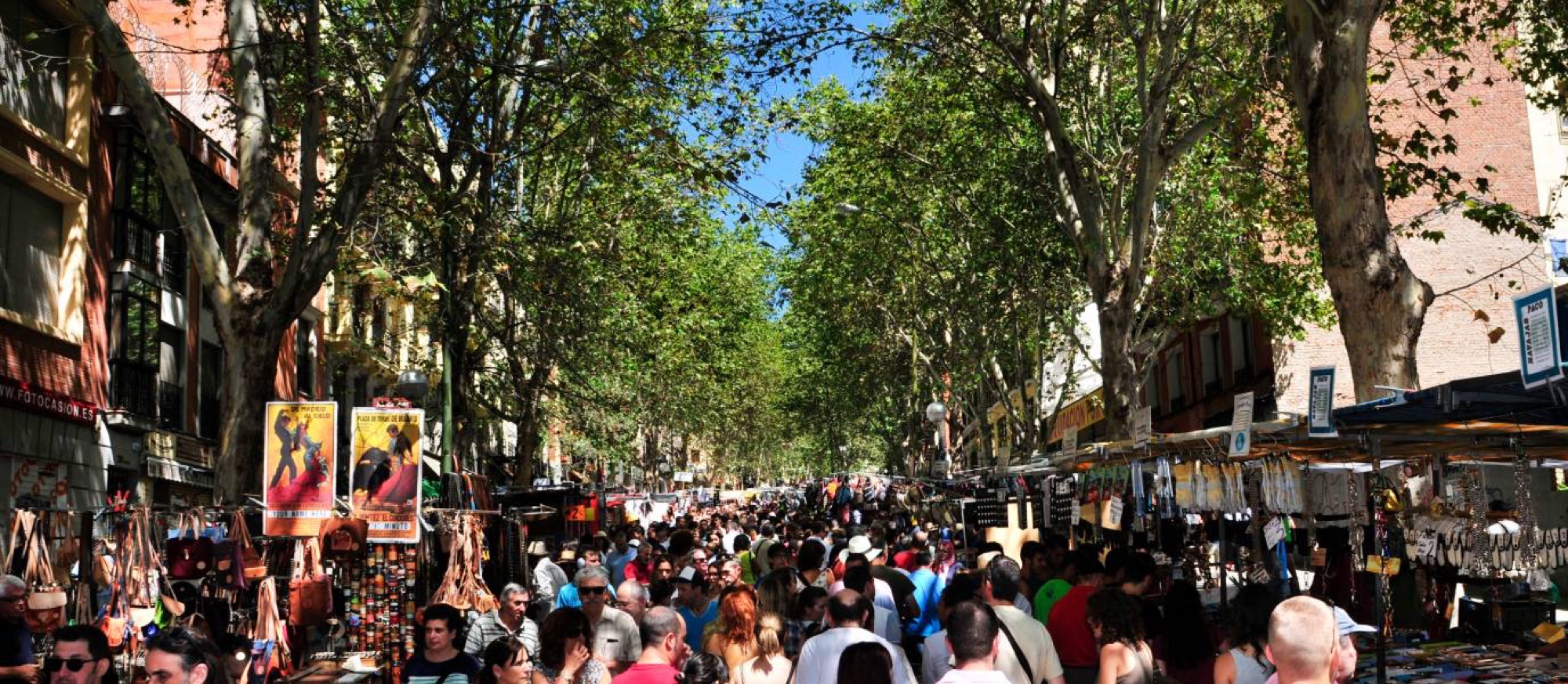
Where I stayed on my most recent visit. One of Madrid's oldest quarters and only a ten-minute walk further south from Sol, the area features the city's oldest buildings and cobbled streets with no shortage of traditional quaint bars and restaurants. A very international area with American accents feeling particularly noticeable. Over the weekends, the area gets especially busy, with the Sunday El Rastro market bringing thousands to the area each week. Even as someone who loves busy, hectic urban settings, it often bordered on being too busy for me at points over the weekend due to the density of the crowds.

Chueca

Nestled immediately next to Malasaña with Gran Vía directly beneath it, Chueca is Madrid's vibrant LGBTQ hub offering numerous dining and nightlife options. Plaza de Chueca and Plaza de la Luna are two of the neighbourhood's distinctive outdoor plazas, perfect for watching the world go by with a cold beer or wine in the evenings.

Salamanca

An upscale neighbourhood with prices to match, any apartments on Airbnb in this area are likely to be prohibitively expensive for a month's stay. In the 19th century, Salamanca was the area for the Spanish aristocracy and today it still retains that sophisticated reputation as a home for high-end shops, boutiques, and restaurants. Conveniently located just north of Retiro Park and with a WeWork on Calle Goya, it's likely to be somewhere you'll enjoy passing through rather than basing yourself.

Where to work

With four WeWork locations and numerous independent operators dispersed across the city, you won't struggle to find places to work. The WeWork sites aren't remarkable and fall short compared to some of the other sites across Europe but provide reliable, consistent options.

Coffee shops are generally open until 20:00, with some cafes like Osom providing dedicated day rate passes with the rate redeemable against coffee and food purchases. If you need somewhere to work from for free for a few hours, the Santander Work Cafés, also popular throughout South America, are useful makeshift options.

Food & drink

Coffee

Libis Specialty Coffee

A coffee shop, art gallery and hair salon all under one roof. Nice spot to stop in for a drink and a small snack, a short walk from the WeWork at Castellana.

Pink Bourbon

If you're passing through Salamanca on foot, it's worth stopping by this popular stand for a quality espresso-based drink, accompanied by music and friendly service. The espresso freddo is a perfect antidote to a hot Madrid summer day.

Food

Trattoria Popolare Fratelli Figurato

Authentic, traditional Neapolitan-style pizzas, served in intimate surroundings. Worth booking in advance, as seating is limited and it's often at full capacity. Named the Best Pizzeria in Spain from 2020 to 2022 by '50 Top Pizza'.

Casa Luna

Quality wines served by the glass, with a warm ambience complemented by sharing plates and a selection of eight different vermouths.

Casa Dani

Top rated

Having sampled numerous tortillas española over the course of the month, this one was comfortably my favourite. Softly cooked, with a runny centre, focusing on traditional fillings. Small queues may be expected during peak lunchtime hours.

Falaferia

Small chain with two locations - If you're looking to pick up a relatively healthy and convenient lunch or dinner, the falafel bowls are a reliable, tasty and inexpensive option served with a range of salads and homemade sauces.

Drinks

SALA EQUIS

A truly unique space, set in a former adult cinema, featuring film, food, and social events. Busy throughout the weekends, it's well worth dropping in for a drink or checking out their website for upcoming events throughout the month.

Bar Benteveo

Top rated

Small, traditional style bar with counter side seating and small tables serving a range of reasonably priced drinks and small plates of food. Would be a regular if I lived in the area.

Off the clock

Off work

Explore El Rastro

Explore El Rastro

Set in the historic La Latina neighbourhood, this flea market centres around Calle de la Ribera de Curtidores, where you’ll come across everything from artwork and vintage clothing to souvenirs and assorted bric-a-brac.

The name means "the trail," thought to refer to the blood trails left by the old slaughterhouses and tanneries that operated here as far back as the 15th century.

The closest metro stop is La Latina on Line 5, just a short walk from Plaza de Cascorro.

The market runs on Sundays and public holidays, from 9 am to 3 pm. Every time I passed through, the crowds were significant. If you want any hope of moving freely, arrive early.

Exercise

Run

Parque de la Cuña Verde de Latina

If you fancy testing yourself with some gentle climbs, this park, which stretches from the Manzanares up to several viewpoints in the Latina district, is an ideal place to head to. Stop off at Cuña Verde de Latina for some scenic panoramic views across the city.

Run

Casa de Campo

One of the largest inner city parks I can recall visiting. An enormous open park situated just to the west of the city centre, five times the size of Central Park in New York and almost seven times the size of Hyde Park in London. You can get quite happily lost exploring its numerous paths, with gentle looping gradients and a picturesque lake to the far east of the park's perimeter. A must-visit during your stay with enough routes to visit countless times.

Run

El Retiro Park

One of the most popular destinations for running and walking off any excess tapas, located in the very heart of the city, just south of the Salamanca district. Originally created as a royal retreat in the 17th century before becoming a public park. Open from 6AM until 10PM and particularly busy during the weekends.

Walk

Parque del Oeste

Situated just to the west of the district of Chamberí, this well-landscaped, sloping park is an ideal place to stretch the legs over the weekend. Would prioritise other destinations for runs unless you want some particularly enduring climbs. The park also contains La Rosaleda, a rose garden created in 1956 that houses over 4,000 roses from around the world and hosts an annual international competition.

Run

Parque de Madrid Río

Alongside the bank of the Manzanares river which flows through the city, this large park stretches from Puente de Toledo to the area of Legazpi. Flat tarmac makes it an ideal loop and a popular destination for evening walks, with some small cafés dispersed along the path. The path continues back up north along the east side of the river, eventually meeting Campo del Moro and the start of Casa de Campo.

People

Madrid was far more international than I’d expected. WeWorks often serve as a useful barometer for this in a city, and on any given day, Spanish would be just one of many accents you'd hear. French, American, British, Brazilian and German were all regularly audible throughout the day across the different sites.

This international feel isn’t confined to coworking spaces - you’ll notice the same diversity walking anywhere throughout the city centre. Madrid acts as a global hub for the Spanish-speaking world, drawing workers from across South America, and its universities attract students from all over the globe.

As a city for meeting remote workers from diverse backgrounds, I can’t think of many better options in Europe than Madrid.

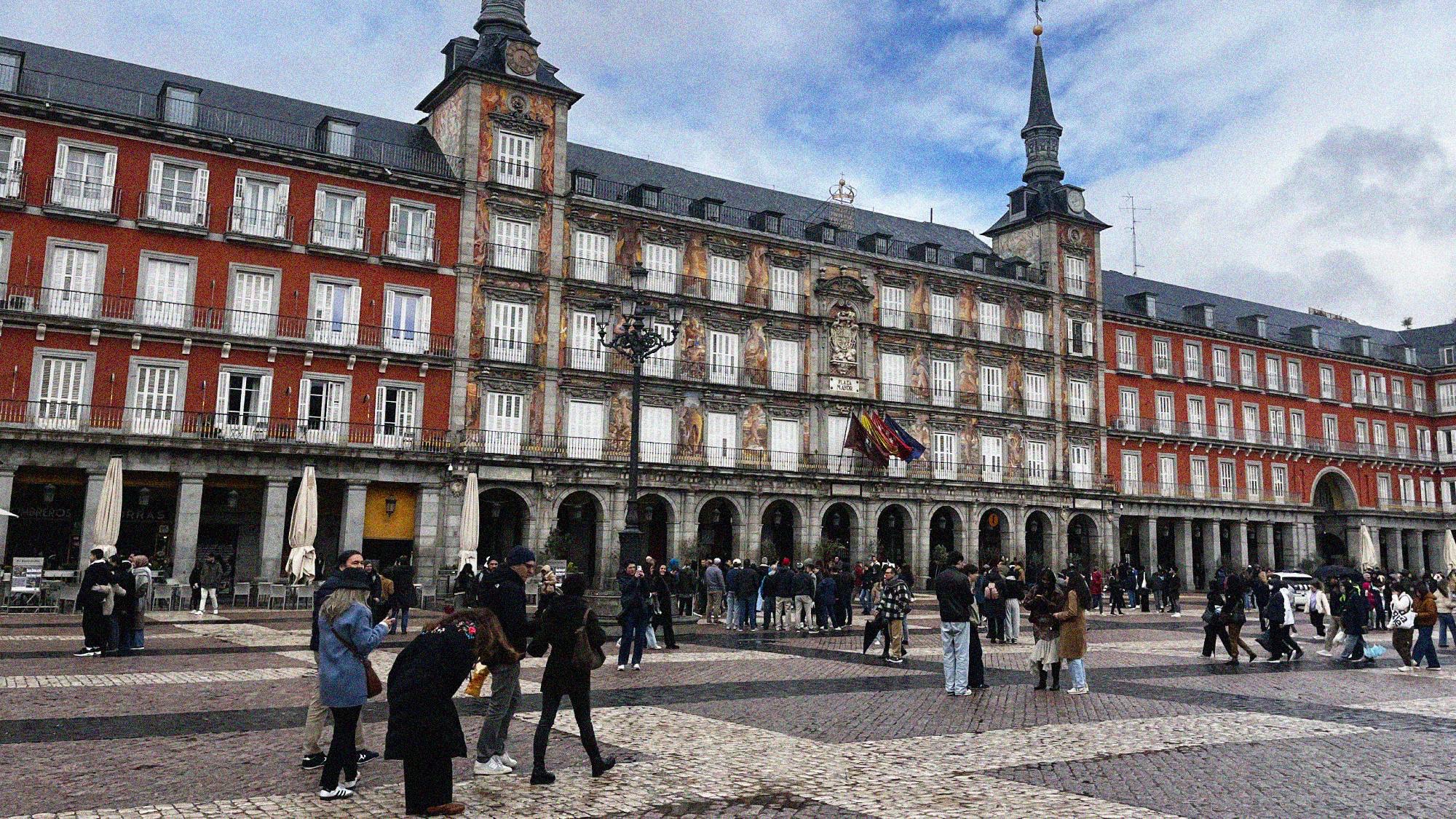
Plaza Mayor is a major tourist attraction, a short walk from the Sol metro station. Completed in the 17th century, expect substantial crowds over the weekend as people pile into the numerous bars and cafes that line each of its sides.

Notes

Positives

A huge variety of outdoor spaces.

Madrid is home to an incredible selection of well-maintained and ecologically diverse green spaces scattered across the inner city. Casa de Campo, Parque de El Retiro, Parque del Oeste and Parque Madrid Río are some of the highlights dotted around the city and make ideal backdrops for a run, walk or cycle.

A great food and drink scene to explore.

Across the city you're spoilt for choice. From casual tapas bars and speciality coffee shops to more refined dining options and late-night watering holes. For a major European city, prices for eating out still feel on the reasonable side. Prices felt consistent; without looking at a menu, a glass of wine always seemed to cost between €3-5 wherever you decided to perch up at, often featuring a small tapas item.

An international atmosphere without losing its identity.

Madrid feels well-balanced. It retains the inherent charm you’d expect from a national capital while functioning as a genuine global hub. It’s unmistakably Spanish at every turn, yet carries a cosmopolitan atmosphere shaped by residents from all over the world.

Friendly and welcoming locals.

In contrast to Barcelona, where I often felt that the presence of tourists was met with ambivalence (if not outright dismay), I found the Madrileños to be far more welcoming. My often mangled attempts to converse in Spanish felt warmly received, making Madrid feel like a much better fit for a month-long stay.

Effective public transport.

With 12 metro lines and numerous overground train services, getting across Madrid is cheap, quick and convenient.

Negatives

A city seemingly often near capacity.

Any trip to Madrid feels like it will be characterised by inevitable queues and waiting. Routine trips to a Carrefour can often see lines 20 people deep with only a single cashier open. Quaint bars may have a queue as long as its entire capacity. Small restaurants appear to run with a skeleton number of staff. Around La Latina, entire pavements routinely arrive at a standstill due to the sheer volume of pedestrians traversing them. These aren't issues necessarily unique to Madrid, but if you are someone averse to vast crowds, this may be an element which does not appeal. With that being said, it's this buzz of people which makes the city so alluring in many ways.

Expensive accommodation.

Unless you've got particularly deep pockets or are willing to drop your standards accordingly, you're unlikely to find much joy finding somewhere on Airbnb. Personally, this would be a limiting feature for making more frequent return visits to the city for prolonged stays.

Spanish food lends itself best to eating in groups.

One drawback I find when eating in Spain is that there are limited opportunities to engage with local food if you're dining alone. Many places offer a lunchtime Menú del Día, but with prices often hovering around €14, it’s not something you’re likely to go for every day. €9 tapas plates work well shared among a group, but a plate of croquettes or cold ham in isolation is unlikely to make for a satisfying dinner. If you’re picking something up solo, your best bet is often from more global options—there’s a solid spread of Mexican, Lebanese and Asian places to choose from.

You might leave the city substantially heavier.

With an enormous selection of unavoidable culinary delights at every turn such as cheeses, cured meats, bread, wine and dessert items to devour, some self-restraint may be needed to avoid leaving several kgs heavier at the airport.

Tips

eSIMs are reasonable value.

I used ones from both Airalo and Sailly during my stay, with good consistent speeds found across the city.

Contactless payment is not yet supported on the metro.

You will need to buy a transport card which you can load with journeys, or buy single tickets each time. If arriving at the airport, these are easy to purchase from the machines by the entrance to the subway. Seperate tickets are required if using the overland train services.

There is a well-used city bike scheme.

BiciMAD has 600+ docking stations across the city. Whilst the inner city doesn't stand out as being particularly cyclist friendly, the outer roads and parks feature well-structured cycle paths making it a viable transport option for certain routes.

Amazon.es works well.

If you are looking to order anything, the service is comparable in terms of speed and choice to what you may expect in the UK or the US.

There's no need to carry cash.

I didn't take money out of an ATM throughout the entire duration of my stay. Revolut may come in handy as a popular option for transferring money between people on the ground.

Planning a trip to Madrid?

Partners I recommend. Some of these links give you a discount, and I may receive a referral reward.

SafetyWing

Specialised, flexible insurance for prolonged trips away.

  • Buy while abroad
  • Global coverage
  • Simple, online claims process
  • 24/7 human support

For trips exceeding 30 continuous days, seek dedicated travel insurance. Most holiday policies or credit card offerings become invalid after 30 days, despite advertising year-round protection. SafetyWing provides medical and travel coverage specifically designed for remote workers.

Having successfully claimed through their platform with impressive speed, I confidently recommend their service.

Sign up and get $20 off

Learn more

Airarlo

Easy access to data on your phone wherever you are in the world.

Get $2.50 off your first purchase

Learn more

Western Union

A convenient alternative to high ATM fees or carrying around cash.

Register and earn £10

Learn more

Suggestions or improvements?

If there's anything you feel that could make these guides more useful, let me know.
Leave a comment

Say hi!

If you've got any questions on any of the destinations or in remote work in general, give me a shout on LinkedIn.
Get in touch

Take every guide with you

The free iOS app has every guide offline, live weather and local time, costs in your currency, and bookmarks for your shortlist.