
Skip to content

ChileChileVisited Nov 2024 · 2 weeks

Santiago

Underwhelming food, incredible scenery.

Great for a holiday
Average7.5
Accommodation8.5
Coworking7.5
Value7.4
Excitement6.4
Living costs, excl. rent~$965
Mild and dry
JFMAMJJASONDMild and dry: Mar, Apr, May, Jul, Sep, Oct, Nov
Nomad visaNone
Population6.9 million
Fly into

SCL

The economic and cultural centre of Chile.

Founded in 1541 by Spanish conquistador Pedro de Valdivia, Santiago has evolved from a colonial outpost into one of South America’s leading cities.

Consider for a holiday

As a city to base yourself for remote work, it fell short for me in several key areas. It's worth stopping by for a few nights as a base to explore the rest of Chile, or if you're already in the region.

At a glance

Accommodation

Great · #10 of 62

8.5/10

Considering the cost of living is generally higher than other cities in South America, high quality, modern apartments still represent good value in Santiago with the price for a one bed apartment similar if not lower to what you may expect to pay in say Bogotá or Lima.

For under £900 on Airbnb, you should be able to find a decent one-bedroom apartment. The prices for accommodation appear to drop the further west you venture towards Estación Central, but your attention will likely be drawn to the opposite side of the city, making any savings on cost unwise.

I stayed at the Concepto Best Site - Imagina apartment block, which was clean and well-managed, but I'd advise against the location in the Centro Histórico, which I'll expand on further.

Even though temperatures can reach 30 degrees during summer, air conditioning is not commonplace in residential units, which you may want to take into consideration if intending on working from home.
How it compares

Coworking

Good · #34 of 62

7.5/10

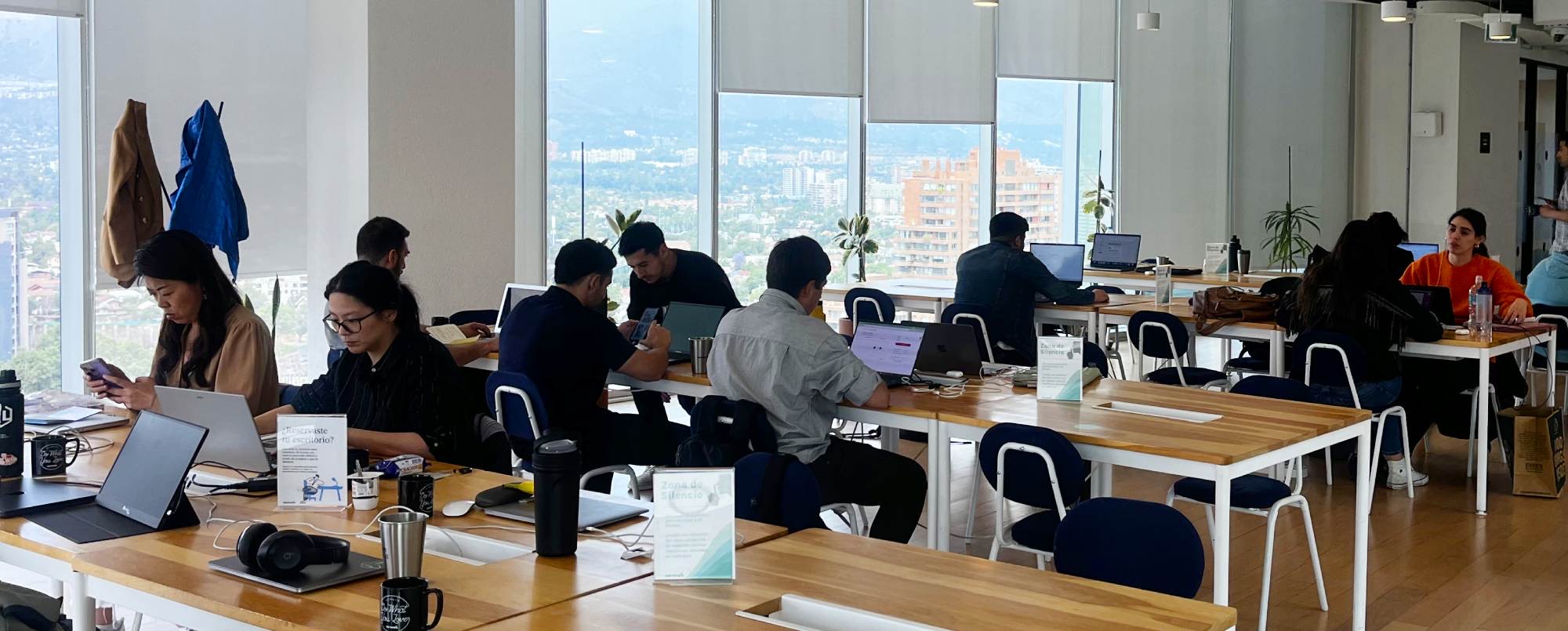
There are a reasonable number of coworking options across Santiago, with most of the quality options concentrated close to the Tobalaba station in Providencia.

Value

Good · #45 of 62

7.4/10

Chile is one of the more expensive countries within South America, and the cost of living in Santiago is, unsurprisingly, the highest in the country. Where I really found a difference between other cities on the continent was in the cost of eating out. Whilst in Lima, Medellín and Bogotá, there were numerous options around the £5-6 mark for a casual, informal local lunch or dinner, there were markedly fewer options in Santiago.

The Chinese restaurants, which can be found all across the city and are particularly abundant in the Centro Histórico, fill out the bottom end of the market but generally bear no resemblance to what you would traditionally expect from the cuisine and aren't appealing prospects for daily dining.

The prices of groceries, especially imported items, again felt particularly steep, and the cost of goods from international brands such as Starbucks and McDonald's felt like they matched or often exceeded what you would expect in parts of Europe. Given salaries are, on average, significantly lower than those in much of Europe, many of these inflated costs didn't quite stack up.

On the contrary, domestically produced wine was exceptionally good value, the metro costs under 60p a ride, and Ubers are generally inexpensive for travel across the city.

If you are just visiting for a couple of nights on holiday, then this should not deter you. Santiago will almost certainly be better value than where you are coming from. But if you are planning a longer trip and intending to eating out regularly, it feels noticeably worse value than other cities in the region.

Excitement

Good · #38 of 62

6.4/10

Where you opt to stay in Santiago will dramatically affect your perception of the city. The downtown area is unquestionably the liveliest part, but after spending two weeks there, it's hard to imagine anyone travelling halfway around the world for what it offers.

The upscale residential areas of Las Condes and Vitacura, while clean, safe and modern, lack any distinctive character or Chilean identity and, depending on where you stay, could feasibly make you reliant on a car or Uber.

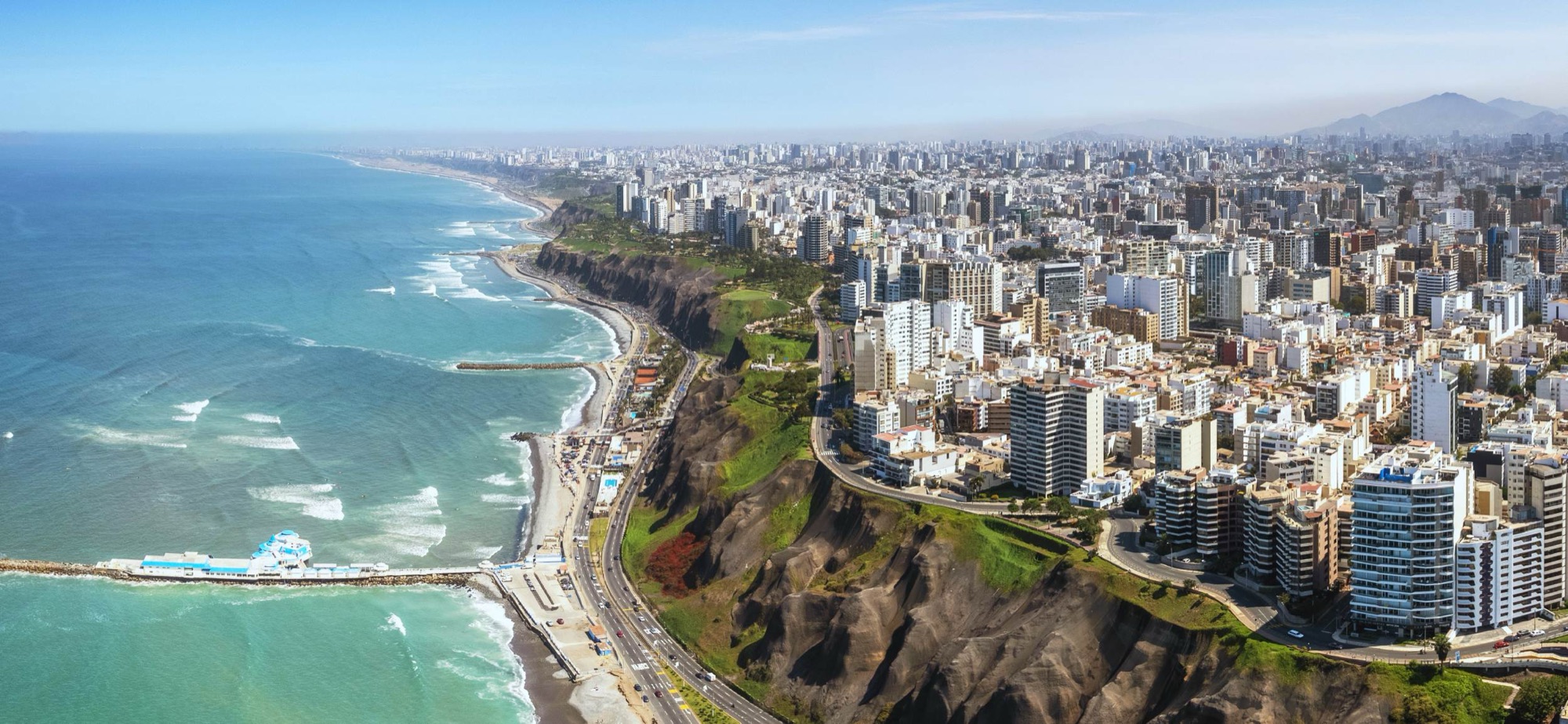
When compared to its neighbour, I found that Lima's Miraflores and Barranco districts together offered the right balance between modern amenities and local culture. Despite exploring Santiago extensively, I couldn't find a comparable area that would draw me in for a longer stay.

How it compares

Plan

Summary

Santiago was one of the first cities on my list when drawing up a plan for South America, for no other reason than wanting to see the incredible skyline of the Andes, which is visible from the city.

It made sense as the next step down from Lima for a two-week stay.

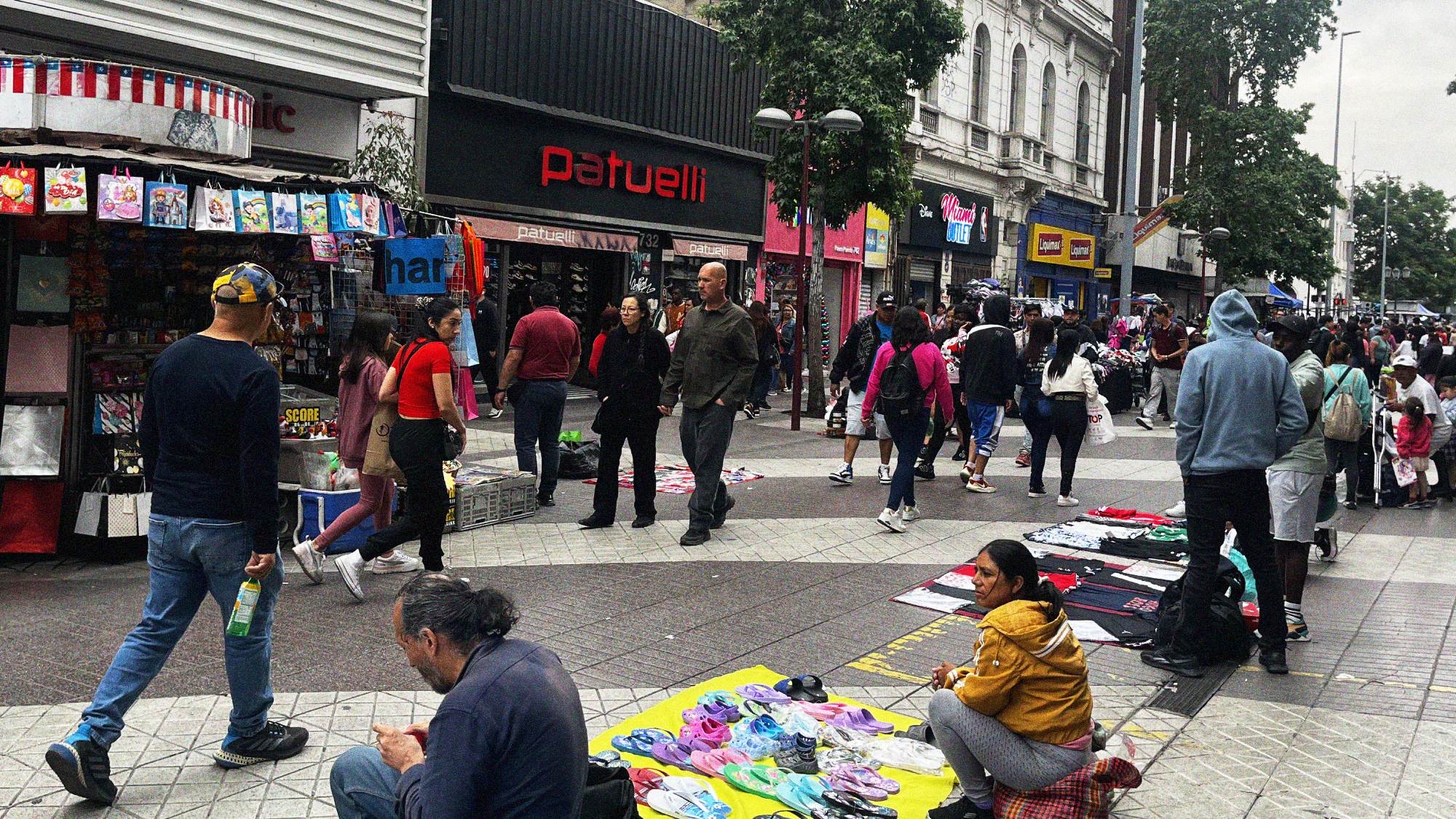
The historical centre bustles throughout much of the week, with street traders lining many of its main streets and selling an assortment of both used and new goods. Plaza de Armas acts as something of a geographical centre, with the main shopping streets located along a thoroughfare called Bandera.

Cost of living

$965a month, before rent

Basic living costs, rent not included

Day-to-day spending for a month: two meals out and a coffee every day, three taxis and two nights out a week, a gym and a coworking desk. Add your rent on top.

Affordable
  • Meal in a casual restaurant$8.34
  • Speciality coffee$2.78
  • Pint of local beer$3.24
  • Cocktail$7.41
  • Taxi for 2 miles$4.17
  • Men's haircut$11
  • Women's haircut$28
  • Gym membership, monthly$34
  • Coworking, monthly$175

Prices as of Oct 2026. Confidence: medium (gym & coworking verified; other prices restated at 2026-10-07 exchange rates). Sources: numbeo.com, wework.com, workin.space. Always check locally before planning around them.

Duration & season

The weather during November was near perfect. Early mornings were cold and crisp, with daytime temperatures reaching 30°C by late afternoon. Similar dry conditions can be found from September through February - ideal months for exploring outdoors. Unless you are specifically after snow, you'd be best visiting in this window.

In terms of duration I couldn't recommend two weeks in Santiago. Three nights should suffice to experience the city's highlights, leaving more time to explore the wider country, which is something I regret not being able to do on this visit. When considering global cities for a month-long stay, Santiago would rank low on my list.

By month

Typical temperatures and rainfall by month
MonthLow °CHigh °CRain mmNotes
January16330peak season
February17344peak season
March13307peak season
April10265
May61996wet month
June715133wet month
July7164
August615106wet month
September72311
October102720peak season
November112815peak season
December14321peak season
Wettest months Peak season

Typical daytime highs and overnight lows, from the last two years of observations (Open-Meteo). Rain icons mark the wettest months.

Visitors a year
2M2024
Crowds
Medium
Peak season
Oct–Mar
Low season
May–Aug

Remote work visa

No digital nomad visa

Working hours

Chile operates on Chile Standard Time (CLT), which is GMT-3 during the summer months, and shifts briefly to GMT-4 in the southern hemisphere's winter months. Compared to Peru or Colombia, this made it significantly easier to maintain a similar working day to colleagues in Europe, requiring no major changes to your daily schedule.

For North Americans, this puts you marginally ahead of Eastern Standard Time and in a good place to maintain any work schedules with little adjustment.

Safety

I walked extensively around much of Santiago and found little cause for concern.

Compared to my previous South American destinations, Santiago proved comfortably the easiest city for exploring on foot. With late sunsets (20:00 in November), you have plenty of daylight hours for exploration.

The Centro Histórico, while rough in patches, feels surprisingly secure.

During weekdays, the large working population keeps the area bustling until late into the evening. Weekends bring quieter streets which feel more eerie than threatening. I'd avoid walking through Mercado Central and the surrounding streets after dusk, as it took on a notably seedier feeling in the late evenings. The lower half of the area closer to the Estacion Universidad de Chile station is in general a lot better. It's a much more viable option than either of the La Candelaria areas in Medellín or Bogotá.

Bellavista has a reputation for night time safety issues.

If visiting for nightlife, use Uber for travel to and from the area. There didn't feel anything to be concerned about during the daytime.

The Metro runs efficiently and securely.

The seemingly never ending flow of passengers on main lines and security guards on the platforms means there's always a healthy presence of people across the system.

Cerro San Cristóbal is super popular on weekends.

Join the crowds of locals walking up if you are hesitant about going up their alone. Again, a much safer option than the equivalent city hikes in Colombia.

Caution should be taken if visiting Valparaíso.

The coastal city is a popular day trip from Santiago but in recent years has had a reputation for being less secure with several dangerous areas. I didn't make it on this occasion but the security situation sounded worse than what you may find in the centre of Santiago.

Live & work

Where to stay

The size of Santiago can be deceptive at first glance of a map.

The city's more upmarket and desirable neighbourhoods lie north-east of the traditional downtown area, and due its size, you should think carefully about where you plan to work from.

Providencia

Recommended

What felt like the best bet for a prolonged stay. A much more contemporary feeling area of the city, with plenty of speciality coffee shops and higher-end bars and dining options. I'd aim to be close to Avenida Providencia between Manuel Montt and Tobalaba metro stations to give convenient access to the Línea 1 metro line.

Lastarria

Recommended

An ideal option if in town for a couple of days and wanting to be nearer the Centro Histórico. Lastarria is nestled immediately to the east and has a much more refined selection of options for eating and dining. Expect to hear lots of North American accents. Not somewhere I would opt for in the long term due to how tourist orientated it felt.

Bellavista

A small hub just north of the Centro Histórico with a range of galleries, restaurants and options for nightlife. It felt fine walking on foot during the day but is reportedly unsafe at night. Probably worth avoiding on your first visit to the city but enjoyable to visit during the day.

Where to work

There are a reasonable number of coworking options across Santiago, with most of the quality options concentrated close to the Tobalaba station in Providencia.

WeWork has only one remaining site in the city, immediately outside Manquehue metro station, which makes it a fair distance from the city centre and a commute you'd be best avoiding.

If you're only passing through Santiago for a few nights and don't want to sign up to anywhere, you may want to consider using the Santander 'Work Cafés'. These bank branches have dedicated coworking spaces installed and offer facilities comparable to dedicated commercial venues. I visited several throughout the city and was pleasantly surprised by the quality of the interiors. I'd suggest trying one outside the Centro Histórico, where you can expect to find a more professional and less 'ambient' working environment. They are generally open from 09:00 - 17:00, closing earlier on Fridays.

Speciality coffee shops aren't as abundant in Santiago as you may find elsewhere - Starbucks have a heavy presence across the city and can make for a viable short term option with most open until 20:00.

WeWork - Av. Apoquindo coworking space

WeWork - Av. Apoquindo

CommunityOn-site café

WeWork occupies 20 out of the 22 floors in this large commercial building in Las Condes.

The main All Access space is on the 22nd floor where there is a large quiet area for focused work, several phone booths, and two large outdoor patios with soft furnishings under the shade. Being so high gives you incredible views with the Andes peering into the distance further East and the core of the city further down to the West.

The main reason I would suggest not working from there is a catastrophically bad offering of food and drink in the immediate area. Whilst there is a cafe on the 22nd floor, it serves an unappealing range of microwaveable burgers, small cakes and Starbucks coffee. There are some more offerings further back towards the commercial buildings near Rosario Norte, but they are too far to be frequently walked during the working day.

The best option I could find in the area was a small outlet called Badajoz 72, around a 5 minute walk from the building. You can get a number of mains, drink and dessert for 7,000 pesos. The food is nothing outstanding but the staff and friendly and the food is served rapidly.

One of the things I enjoy most about working from a new country is spending the working week exploring local food and discovering new coffee shops. This was the first time I can recall where this simply wasn’t an option.

Also importantly, if you are staying closer to the Centro Histórico, the metro journey to Manquehue can be incredibly unpleasant at peak hours. With all things considered, unless you are staying in close proximity or already have WeWork access, I would strongly suggest looking elsewhere.

Food & drink

Coffee

Perfil Coffee

Laptop friendly

One of only a small handful of speciality coffee options available in the historical centre. They offer a range of locally roasted beans from the continent and further afield, with some light brunch options also available. Closes early over the weekend.

Singular Coffee Roasters

Top rated

Small chain with a number of outlets dotted across the city, offering some of the best coffee I sampled in Santiago. Both this and the Providencia site have limited seating and are more geared towards takeaway.

Food

Primos Smash

Excellent variety of smash burgers served in a large industrial-themed outdoor seating area. Would happily recommend the 'Red and Blue'.

La Loncheria

I found good food hard to come by in the historical center but this place is a great place to sample a traditional Chilean sandwich. Could happily recommend the Churrasco Italiano, consisting of fried steak, avocado, tomato and plentiful mayonnaise.

Baco

Top rated

A well-styled yet casual-feeling French bistro-styled restaurant - a great place to sample a range of Chilean wines with an extensive wine list available by the glass.

Drinks

Wine Rebels

A casual, informal bar to sample a wide range of Chilean grown wines. The staff are friendly and knowledgeable, with a glass costing only 4,500 pesos. Small tapas plates also served.

BAR EL BAJO

Large bar set beneath the Gabriela Mistral Cultural Centre. Great selection of drinks with a cosy interior and friendly, attentive service. Quirky toilets.

Off the clock

Off work

Climb Cerro San Cristóbal

Climb Cerro San Cristóbal

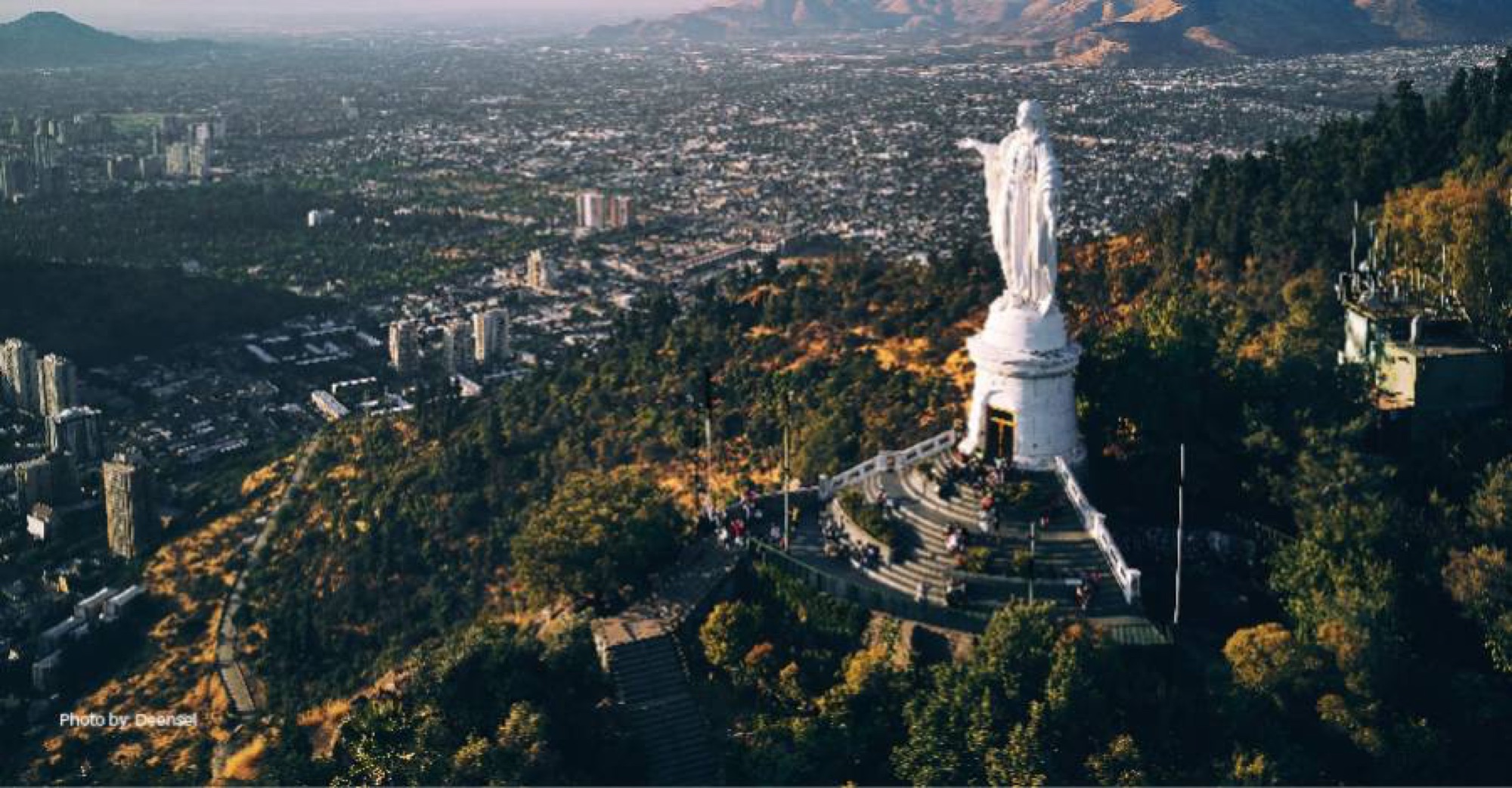
Cerro San Cristóbal is a landmark hill in Santiago, rising 300 metres above the city. It’s located within Parque Metropolitano, the largest urban park in Chile, and offers panoramic views of Santiago and the Andes. Its summit is home to a 22-metre statue of the Virgin Mary, alongside a chapel, an amphitheatre, and a number of outlets for food and drink.

Whilst you can get to the top via a cable car, it’s not a demanding hike, and even if you are not particularly athletic, you should be able to get up there in an hour. If you’re only in town for a couple of days, I’d put it at the top of your list.

Exercise

Walk

Cerro Manquehue

Take an Uber to the trailhead on Vía Roja, where you can take a path leading you up to Manquehue or the shorter Manquehuito slightly to the east. It's a steep climb to the summit along a path with numerous loose stones, offering panoramic views across the city below. Instead of returning to the trailhead, you can traverse over the top to finish in Los Trapenses, though this involves a considerable return journey to the city. No entrance ticket required.

Walk

Parque Natural Aguas de Ramón

It's worth taking an Uber to the entrance of this natural park, around a 30-minute drive from the Centro Histórico. There are a variety of well-marked trails traversing a stream running through the foothills of the Andes, with the trail concluding at some waterfalls. Plan for 5 hours up and down. Book a ticket in advance (3,500 pesos) from the website to avoid queuing on arrival. You will be asked for your ID number but you do not need to bring the physical document with you.

Walk

Santa Lucía Hill + Parque Metropolitano de Santiago

If you're out for a day of exploring, it's worth combining these two sites. I'd suggest visiting at the weekend when you'll be joined by hundreds of others heading up San Cristóbal Hill, which is part of the Parque Metropolitano de Santiago. If you fancy a hike, you can carry on further, with plenty of walking and cycling trails eventually looping back to Vitacura. No ticket required.

Run

Parque Quinta Normal

An easy run if staying in the Centro Histórico, this park is home to the National Museum of Natural History, which, if running on a hot day, can make for a cool, air-conditioned interval. Entry to the museum is free, and whilst most of the content is in Spanish, it provides a great background to the country. Its grounds are ideal for running without interruption from traffic.

Walk

WeWork → Barrio Lastarria

It's a pleasant post-work downhill walk from the WeWork in Las Condes if you are returning to the historical centre or surrounding neighbourhoods. There are plenty of spots to stop for a coffee or snack. It passes through very safe areas and offers a much fresher alternative to taking the metro.

People

Aside from frequently hearing foreign accents in the steets of Lastarria, it was rare to encounter many foreigners throughout much of the city or in the WeWork.

I saw little evidence of a prominent remote-work culture in Santiago, yet it still retains an international feel, acting as a key employment hub on the continent, with a particularly noticeably Venezuelan community in the city.

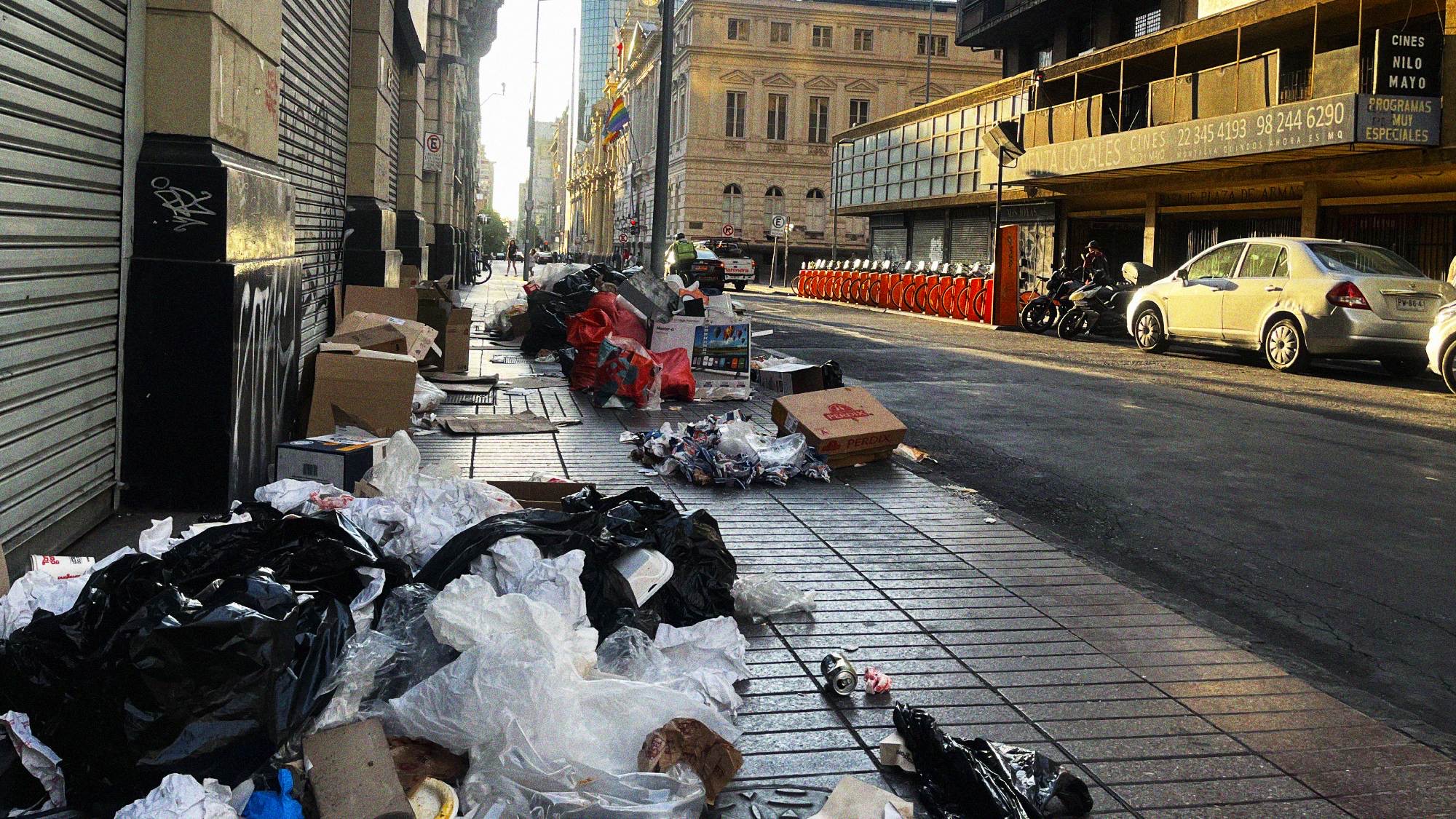
Over the weekends, the absence of the working population means large portions of the historical centre take on a somewhat post-apocalyptic, desolate feel, with mounds of rubbish frequently lining the streets. Whilst it never felt unsafe, your weekends are best spent elsewhere..

Notes

Positives

The Andes provide a spectacular backdrop to the city.

The mountain peaks are often masked by a heavy haze of smog and mist throughout the day, but their sporadic appearance makes for a captivating view which looks as impressive as the photos.

Incredibly convenient access to hiking.

Perhaps one of the most compelling reasons to visit Santiago is to immerse yourself in some of the spectacular nature that can be found on its doorstep. From an hour-long hike up Cerro San Cristóbal to potential multi-day expeditions into the Andes, you don't have to plan too hard to find some great routes.

A strong wine culture.

Wine fans will be in for a treat in Santiago, with great-quality domestic wine freely available in bars and restaurants across the city. Expect to pay around 5,000 pesos for a glass (£4) in a nice establishment, with bottles costing less from a supermarket. Look out for some rarer locally grown varieties such as Carménère and Carignan making an appearance on menus.

Some of the best infrastructure in the region.

The city's expansive metro lines make it easy to navigate what can be a large urban expanse, with trains running up to every two minutes during peak hours. These are complemented by a series of concealed subterranean tunnels which carry a lot of the city's road traffic, making east-west travel easier than it would otherwise be.

Ideal weather.

The weather was close to perfect throughout the duration of my stay in November, a typically dry period with warm days and characteristically clear blue skies, giving way to cool night-time breezes.

High levels of safety by Latin American standards.

Whilst my two-week experience can't serve as a universal truth, Santiago felt significantly safer than both Medellín and Bogotá. Although there are areas you would want to avoid in the city, you can roam the neighbourhoods of Providencia, Las Condes, and Vitacura with a level of freedom similar to that in Europe.Like in any major city, keep an eye on your phone and follow standard safety protocols.

Negatives

One of the most disappointing cities for food I can recall visiting.

Finding a tasty, quick, and inexpensive meal in Santiago was laborious. Chile is not a country renowned for its food, and both Peruvian and Chinese restaurants far outweighed any domestically focused outlets. Whilst the Peruvian places felt of similar quality to what you might find in Lima (if not twice the price), the Chinese restaurants were sorely lacking. There are, of course, great quality higher-end options for both local and international cuisine. But as I reflect on the two weeks, I can't recall having spent so long in a destination and failing to make any sort of connection with the food. Local staples like empanadas appeared anaemic and undercooked, while pastries and other baked goods were generally of low quality by international standards. Street food is practically non-existent, aside from a few men hauling charred meat of unknown origin on makeshift BBQs and offering some rather unappealing sandwiches.

The metro makes for an unpleasant morning commute.

At the risk of sounding over-dramatic, I can't recall a metro system where I ever felt so confident I could catch an illness from just momentarily setting foot in a carriage. Even at an early hour, the trains are frequently close to full capacity. Most journeys see passengers continuously jostling for space, accompanied by a soundtrack of ill-sounding coughs and music blasting from phones. Your morning commute would be best planned by avoiding it if at all possible.

The cities layout failed to inspire.

Structurally, I found the layout of the city underwhelming. Assuming you'll avoid the historical centre, many activity hubs are located next to arterial roads rather than being hubs in themselves. The metro has good coverage but fails to extend deep into both Vitacura and Las Condes which can make accessing parts of these more troublesome than you would expect.

Many items felt like bad value for money.

Whilst higher costs are to be expected in Chile, some items felt disproportionately high. In Starbucks a double espresso can cost 4,800 pesos (nearly £4). A simple meal in an unassuming, rustic, humble restaurant in the historical centre can cost up to 13,000 pesos (£10). Whilst these may not seem extreme in isolation, considering the median income in the country is dramatically lower than the say UK, it doesn't quite add up. If you are planning on eating out for most meals, it adds up over a sustained period.

Extortionate ATM fees.

I couldn't find anywhere which would charge less than £9 to withdraw cash from an ATM, so went the duration of the trip without doing so. Having said that, given the near-universal acceptance of card payments and few items of interest available from the street, you can easily go without.

Tips

Pick up a Bip! card to use public transport across the city.

The cards can be bought and reloaded at any metro station. I had issues using Apple Pay to purchase the card, so I suggest bringing a physical card to use in the station terminals when initially purchasing or topping up. Not all stations appear to have machines which dispensed cards but I had success at the Plaza de Armas L3 station.

An Airalo eSIM was good value.

A 20GB data and voice plan cost $23 USD which, whilst more expensive than local offerings, saved time navigating the seemingly enormous queues in Movistar outlets.

Ubers are available from the second floor in the airport.

They don't appear to be able to pick up from the airport, but I had no problems getting one from the arrivals area, with a journey to the downtown area costing 16,000 CLP (£13). You may see out-of-date information online that the service is illegal in the country; however, in recent years it has become fully legalised and works flawlessly.

Bring some warm clothes for the evenings even in summer.

Even on days when the temperatures reach up to 30°C, it can drop dramatically during the evenings and early mornings.

Sundays are a great time to explore the city by bike or on foot.

Like other South American cities, large portions of the city's roads are closed for the Ciclovía. The area around the Museo Nacional de Bellas Artes is particularly popular with people making the most of the freedom.

Tipping felt less transparent.

Chile shares a similar tipping culture to Colombia via the addition of a voluntary propina (10%). However, while in Bogotá there was an explicit ask of it on each transaction, in Santiago there were occasions where an effort was made to conceal the request. I couldn't quite work out if this was a general cultural trend or perhaps an attempt to take advantage of a foreigner's naivety, but there was a noticeably different dynamic.

Planning a trip to Santiago?

Partners I recommend. Some of these links give you a discount, and I may receive a referral reward.

SafetyWing

Specialised, flexible insurance for prolonged trips away.

  • Buy while abroad
  • Global coverage
  • Simple, online claims process
  • 24/7 human support

For trips exceeding 30 continuous days, seek dedicated travel insurance. Most holiday policies or credit card offerings become invalid after 30 days, despite advertising year-round protection. SafetyWing provides medical and travel coverage specifically designed for remote workers.

Having successfully claimed through their platform with impressive speed, I confidently recommend their service.

Sign up and get $20 off

Learn more

Airarlo

Easy access to data on your phone wherever you are in the world.

Get $2.50 off your first purchase

Learn more

Western Union

A convenient alternative to high ATM fees or carrying around cash.

Register and earn £10

Learn more

Suggestions or improvements?

If there's anything you feel that could make these guides more useful, let me know.
Leave a comment

Say hi!

If you've got any questions on any of the destinations or in remote work in general, give me a shout on LinkedIn.
Get in touch

Take every guide with you

The free iOS app has every guide offline, live weather and local time, costs in your currency, and bookmarks for your shortlist.