Skip to content

TunisiaTunisiaVisited Sep 2025 · 10 Days

Tunis

Regrettably, one to-miss.

Great value
Average7.0
Accommodation8.6
Coworking5.5
Value8.7
Excitement5.2
Living costs, excl. rent~$569
Mild and dry
JFMAMJJASONDMild and dry: Jan, Feb, Mar, Apr, May, Nov, Dec
Nomad visaNone
Population2.6 Million
Fly into

TUN

Situated on the Mediterranean coast as North Africa's historic gateway between Europe and the Arab world.

Throughout history, the city has passed through Roman, Ottoman and later French rule. Home to one of the Arab world's oldest medinas, its port established it as a major commercial hub, and in the modern era it continues to serve as a bridge connecting Arab, African and European spheres.

Give it a miss

With so many great places to explore across the world, I'm not sure who Tunis would appeal to. For most people, the negatives feel too prominent to warrant prioritising a visit. Good weather and friendly people can't save a city with some glaring inadequacies.

At a glance

Accommodation

Great · #7 of 62

8.6/10

When looking at places within a couple of hours of most places in Europe, the cost of accommodation in Tunis is almost unmatched. Reasonable-quality apartments in a decent area can be found for around £600 PCM. This, along with the wider low cost of living, is perhaps one of the most appealing features.

A lot of the building stock is generally quite old across the city, with little in the way of large, modern residential developments being built, at least around La Marsa. If planning on working from home, seek some guarantee of internet connectivity from your Airbnb host before arriving.

With a high prevalence of mosques across the city, think carefully about the proximity you might be to one. The morning call to prayer at 5am can be a particularly disruptive part of each morning, which is best avoided if at all possible.
How it compares

Coworking

Ok · #55 of 62

5.5/10

When looking at coworking spaces across Tunis on Google Maps, there initially appears a decent spread across the city. However, on closer inspection, many of these tend to be more geared towards study spaces for local students than professional-grade coworking spaces.

Value

Great · #7 of 62

8.7/10

If Tunis excels in any area, it would be in value for money. Prices are on the whole incredibly low. In local cafés and restaurants, they are at a level with no equivalent in neighbouring Europe.

An espresso can cost under 50p, a large freshly made (and tasty) sandwich can be found for about £1.25. In better, more modern cafés you are still looking at under £2 for a coffee. Dining in a nice modern Italian restaurant, you can get a quality Neapolitan-style pizza for around £7. A beer from one of the nicest (if not the only) rooftop bars in the city comes in at £3.

Accommodation is perhaps where you are likely to save the most over the course of a month, with Airbnbs still incredibly good value. Reasonable quality one-bedroom apartments can be found for around £600 PCM, which is unheard of in 2025 for any European city.

Excitement

Ok · #51 of 62

5.2/10

Make no mistake about it, Tunis is not an exciting city. It feels largely removed from any contemporary developments in culture, technology, or perhaps anything that resembles 2025 in Europe. The downtown is no beacon of modernity and it carries a drab, worn-down and gritty aesthetic in most areas.

It would be wrong, however, to call it boring. Most of the streets that peel off towards the medina are vibrant little hubs of activity. The small bars immediately off Avenue Habib Bourguiba are brimming with punters on a Saturday night, watching local and European football under a heavy haze of cigarette smoke.

You can find more sophisticated nightlife at the beach clubs in Gammarth, but they were the sort of venues I'd have personally no interest in visiting.

La Marsa is without doubt more laid-back. It just isn't that great as somewhere to work from. It's billed as more of an upmarket, beachside town, and whilst it might be by local or national standards, it didn't feel that significantly different. There are some nicer cafés and restaurants, but not in a great enough concentration for the area to feel markedly different.

There's still a lot of visible poverty, with people fishing items out of bins and begging on the streets. Across the wider metropolitan area of Tunis you have a combination of both a city and a beachside town, with both being pale imitations of what you would ideally want from them as a long-term base for remote work.

How it compares

Plan

Summary

I'd visited North Africa for a road trip through Southern Morocco about ten years ago, so had a vague idea of what to expect from somewhere in the region.

Whilst it made for a memorable holiday experience, it never struck me as somewhere appealing to work from.

I thought I'd challenge these assumptions with a few short city visits this autumn, with Tunis the first stop.

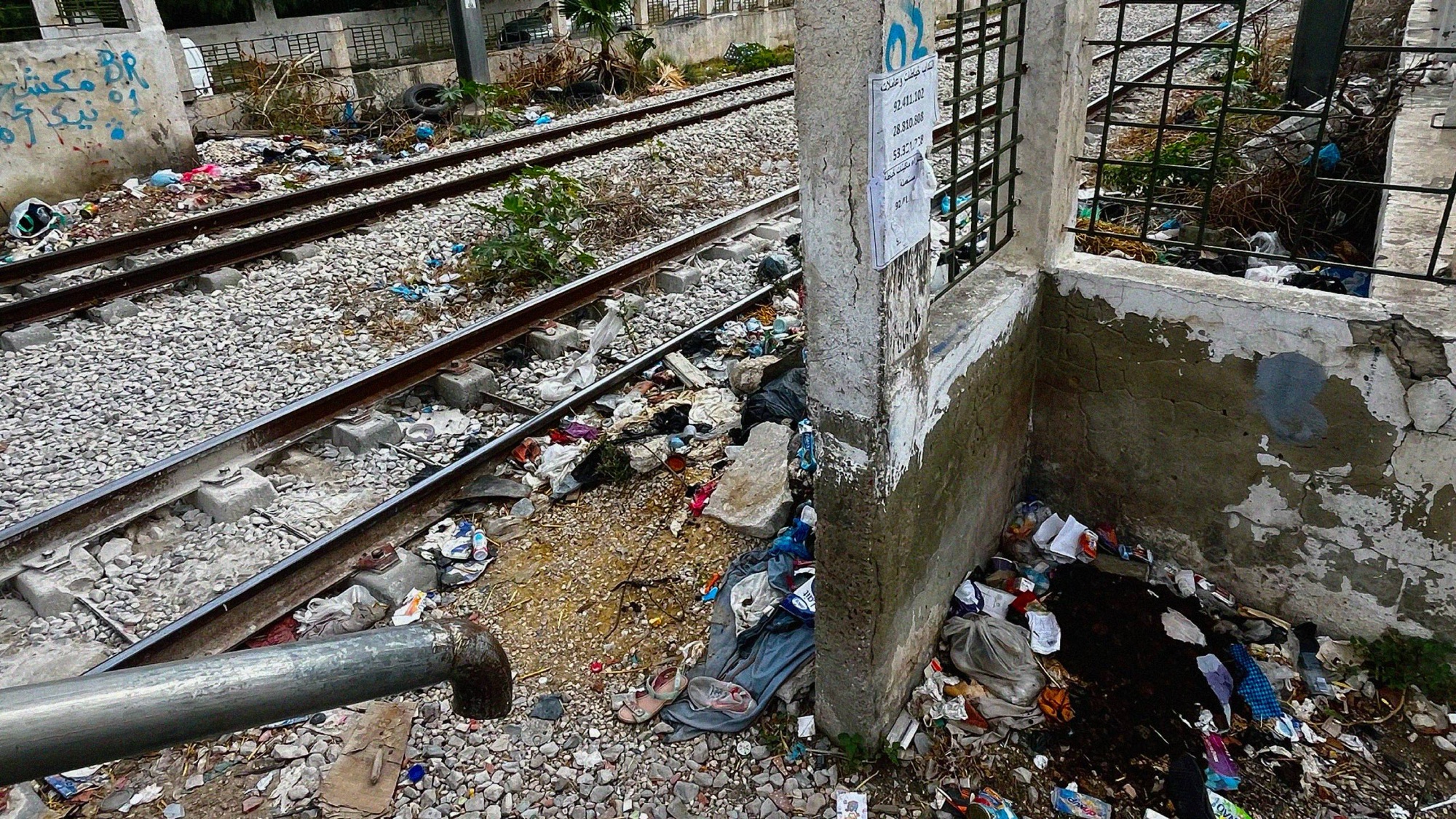
Scenes like this are all too common, with this location in particular being the train station in Hamman-Lif. Waste can be found around every corner with every spare inch seemingly a valid place to be used to dispose of whatever you fancy.

Cost of living

$569a month, before rent

Basic living costs, rent not included

Day-to-day spending for a month: two meals out and a coffee every day, three taxis and two nights out a week, a gym and a coworking desk. Add your rent on top.

Very Affordable
  • Meal in a casual restaurant$4.34
  • Speciality coffee$2.62
  • Pint of local beer$2.02
  • Cocktail$4.71
  • Taxi for 2 miles$1.34
  • Men's haircut$3.36
  • Women's haircut$8.40
  • Gym membership, monthly$37
  • Coworking, monthly$101

Prices as of Oct 2026. Confidence: low. Sources: workin.space, livingcost.org. Always check locally before planning around them.

Duration & season

Visiting during the second half of September, it felt as if you were witnessing the end of a baking summer in real time, as it transitioned into a milder and more comfortable autumn. There was a noticeable five-degree drop in daily highs by the end of the month, with the first couple of days particularly sweltering.

Unless you have a real craving for intense summer heat, I wouldn't entertain the idea of visiting during the peak of summer, with late spring and early autumn likely your best options. The weather was far from the relentless sun I was envisaging, with prolonged overcast periods, several showers and an enormous storm.

If you're looking to escape the depths of the European winter, then a mid-winter trip could be of value, but the Canary Islands would likely hold wider appeal for most.

How long do you need in Tunis? You can get everything you need out of the city over two days. The coastal areas, ruins and a tour of the downtown could easily be condensed into a weekend. I'd be hesitant to recommend anyone booking in for a month without prior knowledge of exactly what to expect, as there's a significant chance you could be underwhelmed.

By month

Typical temperatures and rainfall by month
MonthLow °CHigh °CRain mmNotes
January91746
February91870wet month
March92332
April112540peak season
May153047peak season
June20382peak season
July23392
August23393
September193444peak season
October163161wet month · peak season
November112420
December91755wet month
Wettest months Peak season

Typical daytime highs and overnight lows, from the last two years of observations (Open-Meteo). Rain icons mark the wettest months.

Visitors a year
1M2024
Crowds
Medium
Peak season
Apr–Jun, Sep–Oct
Low season
Dec–Feb

Remote work visa

No digital nomad visa

Working hours

Tunis operates on Central European Time (CET), which is GMT+1 throughout the year, as the country does not observe daylight saving time. This makes it marginally easier to align with European working hours during the winter months, when the UK and much of Europe are on GMT or GMT+1.

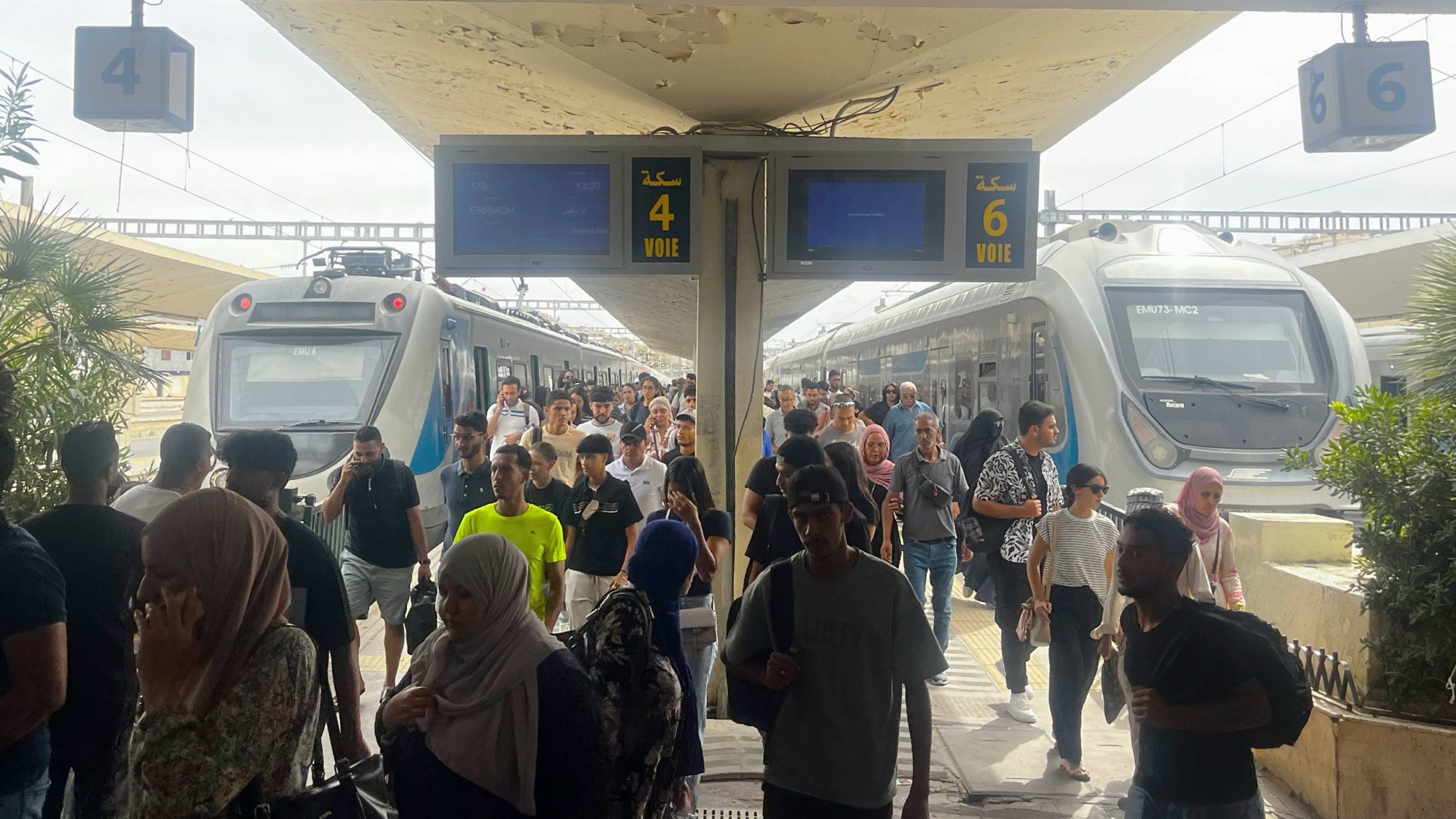
There’s an operational train network in the country, with the line serving the coastal areas to the East of the city centre being particularly frequent. I wouldn’t intend to rely on the line which serves Sidi Bou Said and La Marsa as I didn’t see a train pass during the entire duration of my stay.

Safety

Like other countries in the region, Tunisia has a significant issue with stray dogs.

These aren't friendly neighbourhood dogs you'll encounter in somewhere like Istanbul, but rather large roaming feral packs. 90% of them are of course harmless. During the daytime when it's busy it's not an issue. But in the mornings at 6:30AM when the streets are deathly quiet it's not quite the same story. I was particularly looking forward to going out for a daily sunrise run before work along the beachfront, but stopped after the second attempt having got chased by two particularly aggressive groups. It's a hassle you just don't want to entertain any anytime of the day but particularly not before work. You don't have to look too far online to find evidence of fatalities from dog attacks with the early mornings appearing to be a particularly bad time. Rabies is a real threat and the idea of winding up in a Tunisian hospital felt particularly grim.

Keep an eye out around the Medina.

As a busy tourist hotspot, pickpockets have been known to operate in the area.

Live & work

Where to stay

Most guidance for Tunis will suggest staying in one of the coastal districts outside of the downtown. I followed this and opted for the area of Sidi Bou Said.

I'm confident that for most people the city centre is not an urban environment you'd be too excited about basing yourself in for a month, so the advice to be in the coastal areas does make sense. By car they're around a 20km trip.

I usually feel very confident in recommending an area based on my experience. After ten days, however, I feel a certain degree of indifference or worse towards everywhere in the city.

La Marsa probably does make the most sense, but I'd lower your expectations from what you might read elsewhere online. There isn't really any sufficient draw to warrant being in the downtown, with no standout coworking options that would make it worthwhile.

Sidi Bou Said

Recommended

Where I most recently stayed. Sidi Bou Said is more residential, and you could for a moment think you're in Santorini, with the stone houses painted in a uniform blue and white fashion. There's not a lot going on here aside from a small selection of cafes and restaurants, but as it's only a 20-minute walk into La Marsa, it makes for a peaceful base for a week. It has a particularly fragrant smell of jasmine drifting through its streets, where it seems to grow in abundance.

Gammarth

Large beachfront, further to the north-west from La Marsa. Lots of seaside hotels and some clubs and restaurants, but not somewhere I'd consider staying. No options for coworking, and outside of the resorts themselves, nothing particularly enticing about walking around the immediate area. Wouldn't even suggest it's worth venturing out here unless you're planning on visiting a particular venue.

Hammam-Lif

Would avoid

I got the train down here one day and wouldn't suggest repeating that, let alone considering it as somewhere to stay. Markedly more run-down than the northern coastal neighbourhoods and lacking any of the appealing modern restaurants and cafes you'd find in places like La Marsa.

Where to work

When looking at coworking spaces across Tunis on Google Maps, there initially appears a decent spread across the city. However, on closer inspection, many of these tend to be more geared towards study spaces for local students than professional-grade coworking spaces.

I couldn't see anything across the city which looked like a clear standout option in terms of location and spec, so I would suggest opting for something closer to your preferred area.

The Greenbox in La Marsa (which I've written about further below) was passable for a week, but not somewhere that would be suitable for a longer-term base.

I found internet speeds to be generally unreliable, so I would test the connection somewhere before signing up. Speeds of under 15 Mbps felt common, with the connection occasionally crawling at dial-up speeds or stopping altogether.

Of all the locations you will find mentioned on this website, Tunisia has been the only place where internet was a routine enough issue to warrant mentioning it here.

The Green Box - Coworking Space La Marsa coworking space

The Green Box - Coworking Space La Marsa

Outdoor space

In reality this is more of a study space for local students than a serious professional coworking space. Aside from some occasionally unstable internet, it actually does a fine job for light work.

The main room is kept silent, with strong AC. But if you are spending 40 hours a week in there, it becomes testing. There's a Skype phone booth which isn't air conditioned, with the sensation of making a call out of a semi-operational sauna. There's a single toilet with a seat constantly falling off and a threadbare supply of toilet paper. Some of the seats don't have proper office chairs or aren't easy to connect to power sources.

Even though it is 24/7, the front door frequently slams shut making it impossible to get back in unless someone can buzz you in. It was passable for a week's stay but I wouldn't entertain the idea of doing any longer stint. The staff were particularly friendly and welcoming, and the price was around £20 (!) for the week. From my research, I couldn't find a better option in the La Marsa area.

28 Av. Habib Bourguiba, Marsa 2078

Food & drink

Coffee

Ben Rahim Coffee Company

Top rated

Just off the main roundabout in Sidi Bou Said, this is perhaps the most serious coffee-orientated place I could find in the city. Range of drip methods available, beans to take away and some tasty cakes. Quite possibly the best coffee option for a significant distance across this part of North Africa.

Boulevard des capucines

Laptop friendly

A higher-end patisserie and coffee shop based in the centre of La Marsa. Modern decor, quality cakes and some outdoor seating spilling out onto the street. Some decent light lunch and brunch options too and outside of peak hours it's somewhere you could comfortably do a few hours work. The ice cream shop 'LOU' next door is also decent and wouldn't look out of place in London's Soho.

Food

Restaurant Bahroun

If you are in the downtown and looking for a quick local lunch, I thoroughly enjoyed the rotisserie chicken from here. Probably not one for anyone who enjoys the finer things in life, but nevertheless a large, tasty and cheap meal. Half a chicken with chips, salad and a side costs 15 TND (£3.80).

DaPietro Sidi Bou Saïd

Top rated

Just down the road from Ben Rahim, I was impressed with the quality of the pizzas from here. Rapid service, perfectly crispy bases and a good selection of toppings. Expect a large pizza with a drink to come in at an exceptionally good 38 TND considering the quality of the food and service.

Oueld El Bey

If you are working around La Marsa and want a quick, hearty lunch, it's worth stopping by here for one of their sandwiches or plates. Choose from a selection of meat options which are accompanied by a range of salads, sauces, pickles and some great pommes frites. It is chaotic, loud and messy at the peak of lunchtime around 1PM.

Drinks

Habibi Downtown (Le Jamaica Bar)

Top rated

In the centre of the downtown on the 10th floor of the El Hana International hotel. Great views across the city and inexpensive beers. 100% worth popping in if walking by.

Bar Les Sportifs

Rowdy little sports bar, serving beers and light snacks. Filled so heavily with smoke, be prepared to get the washing machine on as soon as you step back through your front door. Not entirely sure any women have ever set foot on the premises.

Off the clock

Off work

Visit the Medina

Visit the Medina

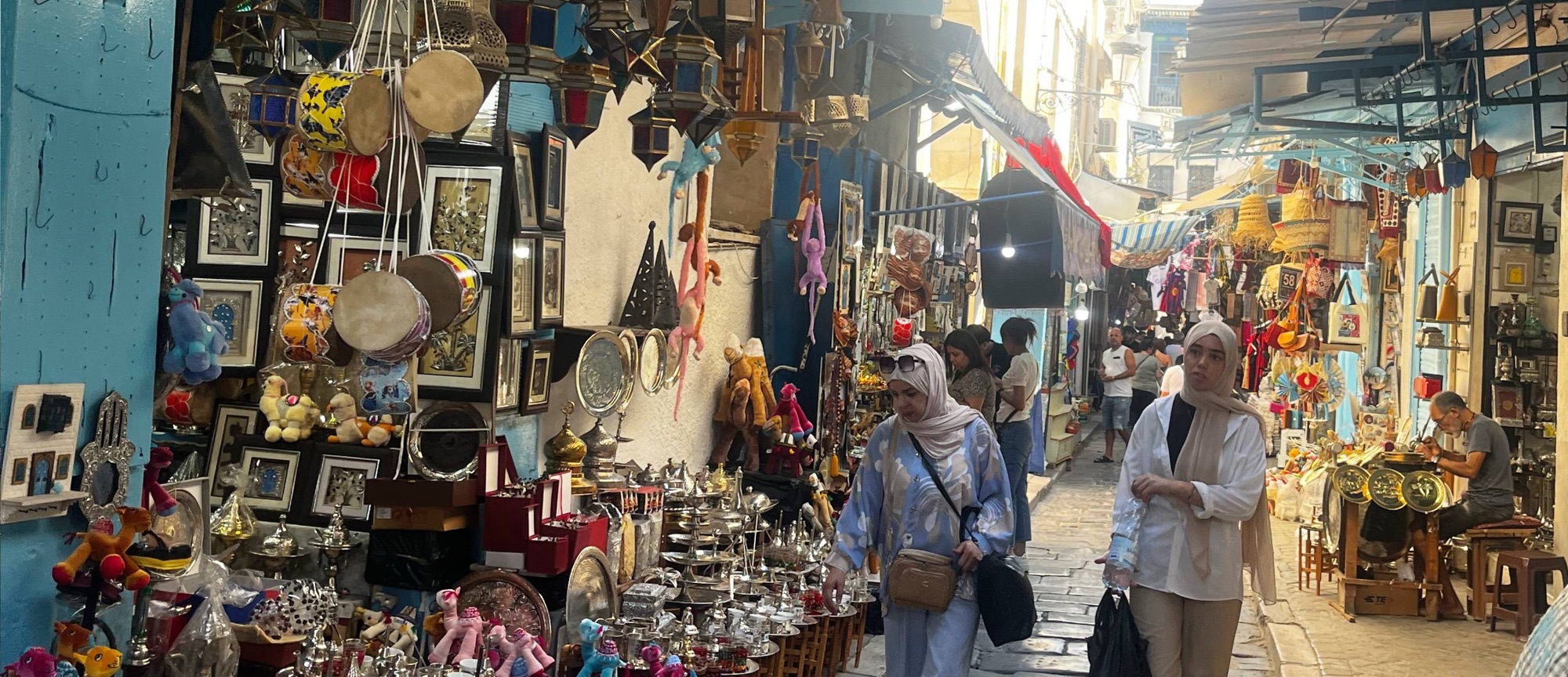
A sprawling medieval quarter and UNESCO World Heritage site at the heart of Tunis's downtown, well worth an hour wandering around if you're in the area. Aim for the historical landmark of Bab al-Bhar on the far east side as your entry point.

Dating back to the 7th century, it's a maze of tightly woven narrow alleyways, traditional souks, and historic mosques. Look out for vendors selling Tunisian 'tacos', which are more like large tortilla wraps, but make a tasty snack to take with you.

As a foreigner you'll probably attract some immediate attention when entering or leaving the site, so be wary of anyone approaching you in an overly friendly or pushy manner. I saw reports of pickpockets operating in the area, which isn't something I witnessed, but it's worth keeping particular attention on your belongings in the tight, busy passages.

Exercise

Walk

Belvedere Park + Central Tunis

The northern neighbourhoods of central Tunis were relatively interesting to explore on foot, before arriving into the unfortunately trash-laden Belvedere Park, which offers good views into the downtown. The route from here into the city centre felt entirely safe to explore on foot. The most northerly part of the city centre appears particularly gritty and run-down, but at no point did it feel unsafe.

Run

Sidi Bou Said to Gammarth

This is a solid run taking you through the more upmarket neighbourhoods of La Marsa before getting into the more dispersed, resort-based landscape of Gammarth. You can loop back around via the Forêt Gammarth into the town again, or take one of the many waiting taxis back to your starting point. Some great views of the bay looking east.

Walk

Catharge Waterfront

From Sidi Bou Said it's a pleasant walk south, where you can easily stop in at some of the historical sites dotted around close to the Carthage Présidence. There isn't much of a sustained beachfront, but you can follow the water along at various points before you get to the Punic Ports of Carthage.

Run

Sidi Bou Said Waterfront

From the main centre of Sidi Bou Said you can drop down to the beachfront, where there is a small harbour and a selection of houses in various states of disrepair. Take the road back to the north, which goes up quite an aggressive gradient before reaching the old town. Should be a great route on paper, but the area is plagued with stray dogs, which make it one to swerve in the early mornings.

People

Unless you speak French or Arabic, there's likely to be a sizeable language barrier with much of the population, with English generally spoken sparsely. Whilst Arabic is the official language, much official communication and business content will be produced in French.

I've left with a warm impression of the Tunisian population. In the coffee shops and lunch places I frequented, it felt people made a genuine effort to compensate for my inability to communicate effectively in either of their languages.

Over the ten days I didn't see too many other English-speaking tourists during my time in the country, and it felt like it may still carry a small amount of novelty. Most of the other tourists I spotted tended to be more senior European couples with a sparse number of younger French and Italians. You'll tend to find these in concentrated numbers around the medina in the old town, but that rapidly dissipates as you move away.

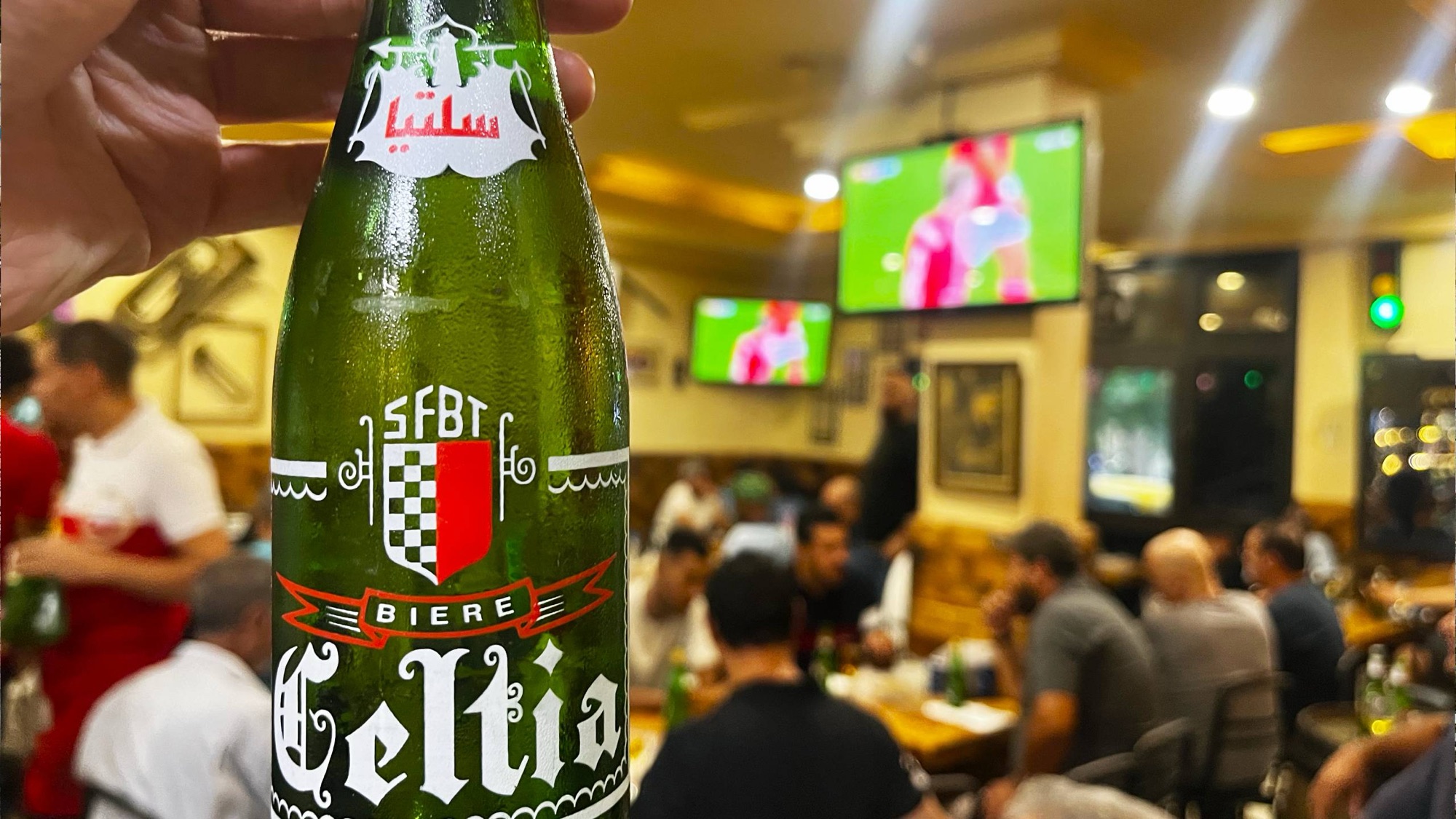
One of the most interesting facets of the trip was seeing Arabic script less inseparably bound to Islam, even extending onto the branding of the local Celtia beer. The bars in Tunis can mainly be found within the downtown area and tend to be male-dominated, smoke-filled rooms almost exclusively showing football.

Notes

Positives

You won't spend a lot of money.

If you are looking for a cost-effective destination, somewhere to be within a couple of hours of Europe, you won't find much better than Tunisia. However, unless you were really trying to reduce costs, the negatives will likely far outweigh any financial savings.

The people were very hospitable.

I've left with a positive impression of the Tunisian people, who I'll recall as being welcoming, warm and friendly.

Some tasty food.

In a similar vein to Ho Chi Minh, the French colonial legacy has resulted in somewhere with a modern day love of sandwiches. Whilst not as distinctive as a Banh Mi, the Tunisians certainly know how to put one together. Expect generous volumes of harissa, salt mechwiya, zalouk, beef salami and various salad items. A 'plat tunisien' is also a solid hearty lunch, consisting of a similar array of sauces, tuna and consistently well-done chips. Rotisserie chickens are also popular and frequently found across the downtown. If you're happy to lower your food hygiene standards, the local food is inexpensive and tasty. In terms of international options, there's no shortage of pizza and burger options with several more refined options available across for both in La Marsa and Sidi Bou Said.

Surprisingly liberal.

Tunisia proved more liberal than anticipated in many regards. The sight of nearly every man leaving the supermarket on a Saturday night clutching bottles of alcohol came as something of a surprise. Smashed bottles of local beer Celtia, with its instantly identifiable red and white branding, make up a considerable amount of the waste you'll find in the streets. The city even had a visible LGBT community, on a level which didn't seem viable in an Arab country. Bars exist but are generally confined to the downtown area, taking the form of smoky, male-dominated spaces for watching football. Make no mistake about it, Tunisia leads no charge for progressive values by global standards. But amongst its peers in the Arab world, it's somewhere which doesn't feel too radically different from neighbouring Europe.

A prominent floral aroma of jasmine.

Aside from some particularly perfumed laundry detergent, I'd never smelt the jasmine flower in such concentration before arriving in Tunis. It appears in frequent, surprising bursts across the city, being particularly prevalent around Sidi Bou Said.
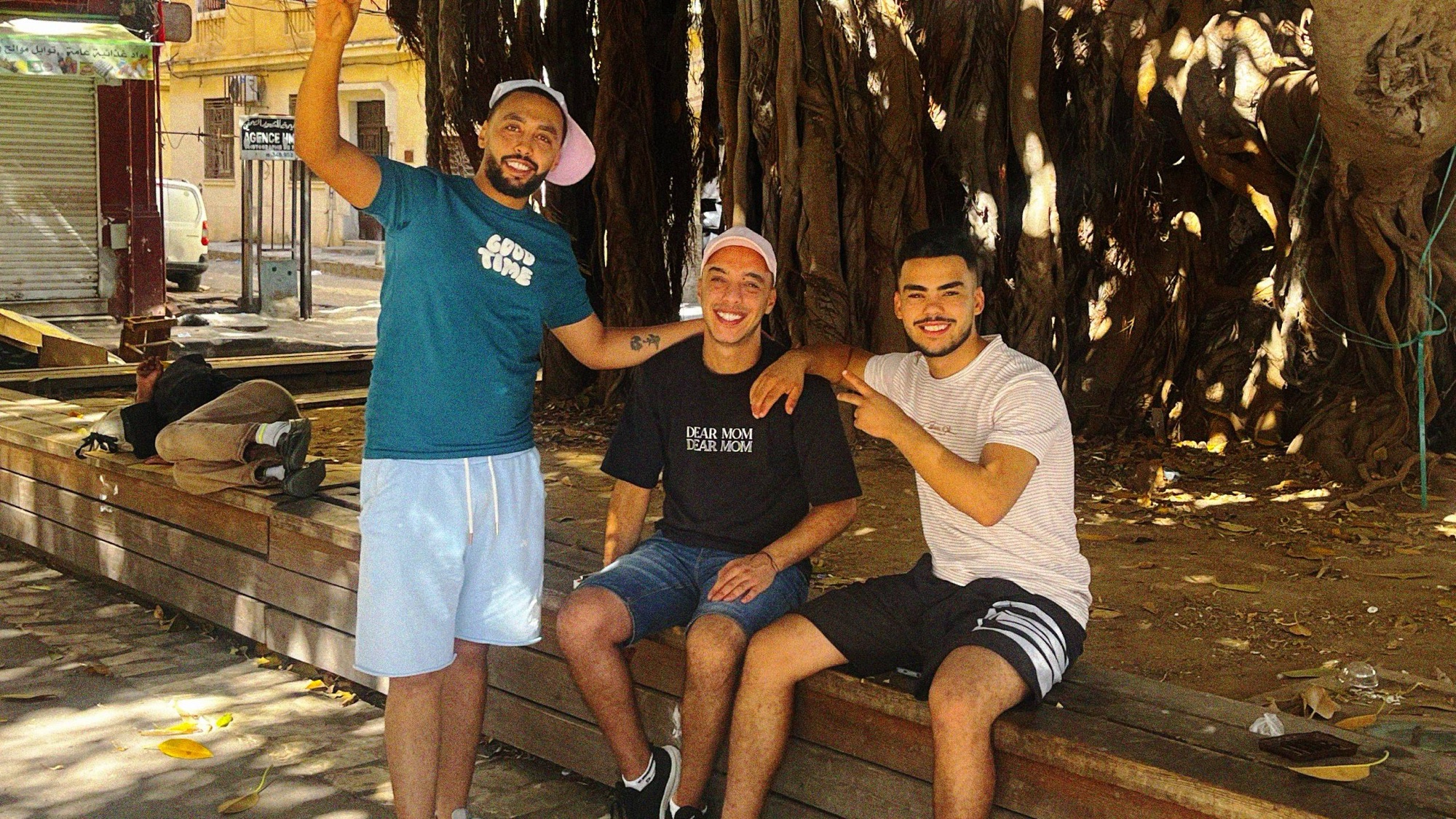
The Tunisian people I met throughout the trip were consistently friendly and welcoming, even if there was minimal overlap in our spoken languages. These gentlemen were particularly eager to be featured on my camera roll.

Negatives

The trash.

I'm no eco-warrior. I'm unperturbed by most displays of litter and waste. But what I saw across Tunis genuinely shocked me. Trash is everywhere. This isn't just a couple of crisp packets on the street. Industrial-scale fly-tipping of residential and commercial waste is rampant. The problem actually gets worse as you leave the city centre and more open spaces emerge. This isn't confined to certain neighbourhoods but pervades even the areas deemed more upmarket, such as La Marsa and Sidi Bou Said. The issue apparently stems from a lack of government funding for proper waste disposal, but it feels like it has resulted in a wider societal acceptance of using any open space as a dumping ground. Residential areas, parks and transit stations all become fair game. I can't recall seeing anything like it, rivalled only by my experience in India 15 years ago. Areas which have the potential to be scenic outdoor spots, like Belvedere Park, just north of the downtown, or the coastline near Corniche Lac 2, end up resembling waste disposal facilities.

Internet speeds.

Tunis has been the only place where I've continuously faced issues with internet speed and where by I’d make a point of it being actually problematic. Both in the Airbnb and the coworking space there were periods where the connection would drop to dial-up speeds. One morning I waited what must have been 45 seconds for a particularly robust JIRA ticket to open. Most places across the world have solved good internet by 2025, Tunisia appears to have not. Worth noting that the 5G connection on my phone was actually surprisingly good, and I'd opt for a local SIM with a generous data package if returning.

The restaurants.

I'd preface this by saying I actually really enjoyed the Tunisian food. But the style of the restaurants makes sampling local food more challenging than in other countries. Most of the places where you can grab a quick local style lunch or dinner in La Marsa or Sidi Bou Said generally tend to be 'Fast Food' style outlets. Many of these will fall considerably short of people's food hygiene standards. I don't think you would need to be particularly fussy to not want to eat in some of them. I just came from Turkey which always feels like one of the easiest places to sample local food and it's a polar opposite experience if comparing the two in terms of accessible, inexpensive restaurants to dine in.

Numerous frustrating elements of daily life.

At the risk of sounding pedantic and whining, these are all minuscule things but items which may continually grate at you during a working day. Flies are everywhere, mainly due to the heat but no doubt spurred on by the volume of trash everywhere. I've batted one away six times whilst writing this passage. Cars are constantly honking in an irrational manner. Similar to the collective attitude to waste disposal, one man honking quickly eggs on a crowd. Drivers are frequently inconsiderate and unaware of any pedestrian attempts to cross the road. Ordering in a local place can involve initially paying to get receipt, and then entering a second queue to wave your receipt for someone to prepare your order, competing with another 15 people. Service staff will often be quarrelling with one another in a heated discussion in Arabic, often forgetting to process your order midway through. Toilets, western style or squat, are in short supply, more often than not without paper. Many cafes still permit smoking and with the dense wafts of cigarettes you can feel like you are entering a bygone era. Taxi drivers will often ask you for directions, even with a fully functioning GPS and an assurance that the destination is correct. They appear to often forget their phone exists. One driver inadvertently drove me to the departures area at the airport, which must be his most common destination for tourists. There was a fixed fare through InDrive so wasn’t a scam, just a lack of attention on where you’re supposed to be going (We had a good laugh about it and he was massively apologetic). If you're on holiday, these things can be tolerable, maybe even add to the overall character or 'experience' of a trip. If you're working and going about your daily business, they were just frequent, minor sources of aggravation which you can do without.

Tunis-Carthage airport is dire.

Aside from feeling as though it was last renovated in the 1970s, perhaps the most egregious aspect is the refusal to accept their own currency past security. Spend any dinars you may have before arriving at the airport. It's an embarrassing piece of national infrastructure and a dissapointing way to depart from the country.

Tips

It's worth working out where the nearest Mosque is to your Airbnb.

My apartment immediately faced one and each day I woke up at 5AM with the particularly sombre morning prayer losing its novelty by day 2 and becoming an energy sapping feature of each morning.

Bolt has recently pulled out of the country, leaving only InDrive as the remaining ride hailing service.

It's cash only but does the job fine. I never had to wait more than 5 minutes. If it looks like someone is going the wrong way, it's almost guaranteed to be due to their inability to read the map rather than any intentional attempt to scam you. The fares are fixed and appear around 25% higher than what the standard metered price would equate to but unless you speak French or Arabic, it saves a lot of hassle. Have a quick scan of the airports reviews on Google Maps and you'll see countless individuals who have been grossly overcharged once arriving in the country. Ensure the meter is running if taking a traditional taxi.

Cash withdrawals appeared to have a flat fee of 10TND (£2.50).

Card payments were accepted almost everywhere except from the smallest of local cafes and bars.

Don't trust ChatGPT and other LLMs when doing research.

They must have been fed on some particularly inaccurate training materials. ChatGPT states that there are bars and nightlife options in Sidi Bou Said and La Marsa but this is not the case. There may be a couple of restaurants which serve alcohol but they paint a very different picture from what you will find on the ground.

A MobiMatter eSIM worked fine.

10GB cost around £10 and the 5G speeds were better than anything I found on wifi.

If looking for a gym, head to Top Form in La Marsa.

If you are just passing through for a short period, this is a great option. A day pass costs a very reasonable 10 TND (£2.50). Ensure you bring a towel with you which is compulsory for entrance. The equipment looks like it might be from the 1970s, but there's a decent range and the owner is particularly welcoming.

Planning a trip to Tunis?

Partners I recommend. Some of these links give you a discount, and I may receive a referral reward.

SafetyWing

Specialised, flexible insurance for prolonged trips away.

  • Buy while abroad
  • Global coverage
  • Simple, online claims process
  • 24/7 human support

For trips exceeding 30 continuous days, seek dedicated travel insurance. Most holiday policies or credit card offerings become invalid after 30 days, despite advertising year-round protection. SafetyWing provides medical and travel coverage specifically designed for remote workers.

Having successfully claimed through their platform with impressive speed, I confidently recommend their service.

Sign up and get $20 off

Learn more

Airarlo

Easy access to data on your phone wherever you are in the world.

Get $2.50 off your first purchase

Learn more

Western Union

A convenient alternative to high ATM fees or carrying around cash.

Register and earn £10

Learn more

Suggestions or improvements?

If there's anything you feel that could make these guides more useful, let me know.
Leave a comment

Say hi!

If you've got any questions on any of the destinations or in remote work in general, give me a shout on LinkedIn.
Get in touch

Take every guide with you

The free iOS app has every guide offline, live weather and local time, costs in your currency, and bookmarks for your shortlist.