Skip to content

UzbekistanUzbekistanVisited Jun 2025 · 1 Month

Tashkent

28 days too many.

Great valueWould avoid
Average7.0
Accommodation7.5
Coworking8.2
Value8.5
Excitement3.8
Living costs, excl. rent~$671
Mild and dry
JFMAMJJASONDMild and dry: Mar, Apr, Oct, Nov
Nomad visaAvailable
Population3 Million
Fly into

TAS

Uzbekistan's capital was a major administrative hub of Soviet Central Asia.

Under Soviet rule from 1930 to 1991, Tashkent was rebuilt extensively after a devastating 1966 earthquake. The result is a city characterised by imposing government buildings and sprawling residential blocks connected by endless wide roads. Despite serving as the gateway to Samarkand, Bukhara, and Khiva, the city itself feels surprisingly devoid of any real cultural attractions. In 2025 it still carries the atmosphere of a bureaucratic, administrative centre rather than a vibrant capital city.

Give it a miss

Should you come to Uzbekistan to primarily work from Tashkent? Absolutely not. Enjoy the country as a traditional holiday and make a sharpish exit to somewhere more exciting.

At a glance

Accommodation

Good · #36 of 62

7.5/10

Similar to Almaty, Airbnb still presents good value in Tashkent, but at prices which are not entirely reflective of day-to-day costs. Expect to spend around £1,000 PCM for a quality one-bed apartment in a well-connected, central area of the city.

There appears to be a significant number of new condo units popping up all across the city, so I would expect the quantity and quality of building stock on Airbnb to increase in the coming years.

Even with summer temperatures routinely exceeding 40°C, swimming pools didn't seem to feature as part of the building stock, likewise with gyms.

Assuming you are heeding my advice to spend only a couple of days in the city, opt for a hotel.

How it compares

Coworking

Great · #18 of 62

8.2/10

For a city that lacks some of the more modern amenities you may expect, Tashkent has got a more than acceptable number of coworking spaces dotted across the city. I would look no further than the Ground Zero chain which I've written about in depth further below.

Value

Great · #10 of 62

8.5/10

Prices in Tashkent mirror what you're likely to find elsewhere in the region. Expect significantly cheaper costs on day-to-day goods, particularly when it comes to eating out.

In a mid-range restaurant like 'Mar mar sharq taomlari', you can expect to pick up shashlik meat skewers for under 20,000 SOM apiece (£1.20), and large salads for 40,000 SOM (£2.50). A generous, hearty portion of plov can generally be found across the city for under 50,000 SOM (£3).

Drinks and pastry items from coffee shops are generally under half the price of what you'd expect to pay in a major European city, and even though conventional pubs are sparsely found, they have competitive prices.

I've given it a lower rating on value compared to Almaty, however, as whilst in raw costs it may in fact be cheaper, I didn't find there were as many places where you'd be compelled to spend your cash.

The cost of taxis is almost concerningly low and reflects the significantly reduced purchasing power parity reality for many locals earning in SOM. A 20-minute Yandex journey from the airport to my Airbnb cost around £1.50, placing it below what you might find even in South-East Asia.

Excitement

Poor · #60 of 62

3.8/10

For a city of 3 million people, Tashkent feels almost incomprehensibly unengaging.

In fact, I would go as far as rating it as the least dynamic place I've ever visited with direct regard to its size. It contains all the markers of a big city: solid infrastructure, a national hub of industry, modern skyscrapers, but it lacks any core commercial centres that draw you in. This is in part due to the extensive rebuilding after the 1966 earthquake.

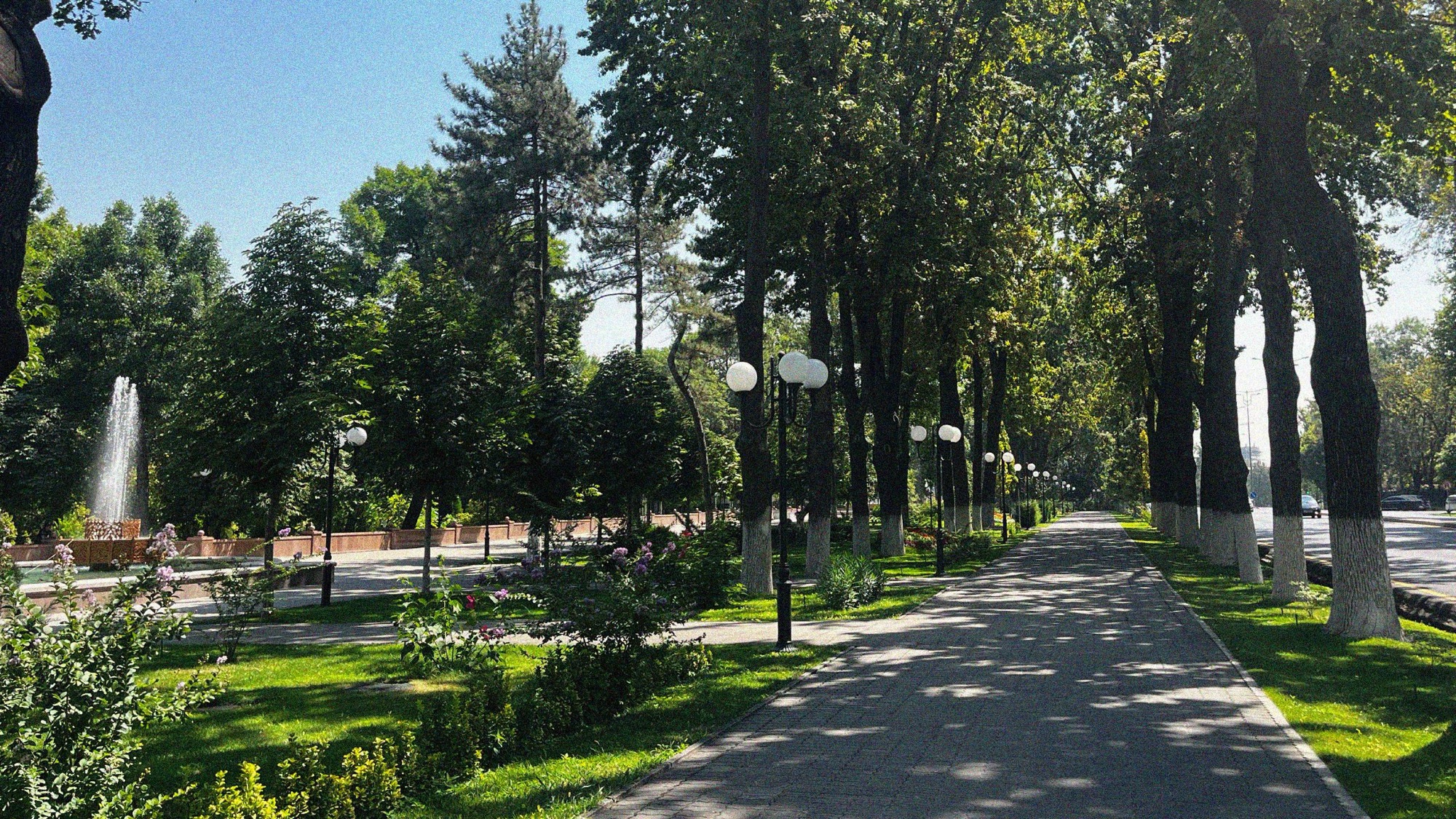
There is no real city centre to speak of. The core of the geographic centre close to Amir Timur Square is an array of beautifully landscaped gardens and boulevards, which almost turn into ghost towns during the evenings.

Along Shakhrisabz Street, and particularly close to Ming O'rik metro station, you have areas which faintly feel like they mirror the intensity of a conventional city, but in reality it's nothing more than a busy road with some shops on either side.

Bars are both rare and spread thinly throughout the city, meaning there's no real nightlife hub where you'll find concentrated activity, especially at weekends.

Even though on paper Tashkent resembles much more of a city than either Bishkek or Almaty, for the first two weeks I found it almost unimaginably dull, to the extent where, if it were not for having an excellent Airbnb and coworking space, I may have even moved on early.

Tashkent carries all the baggage of a major city in terms of its infrastructure, population and size, but with none of the excitement or energy that they generally facilitate. At the very least, I generally always find one neighbourhood that truly resonates with me and I'll enjoy routinely walking around on foot or daydreaming about whether I could consider permanently living there, but this was a notable absence on this trip.

In ways it reminded me of Kuala Lumpur, where there feels an intentional effort to shift the city's nighttime focus away from a western-style entertainment culture based around alcohol and late-night venues, and into something more focused on family-friendly spaces.

How it compares

Plan

Summary

I had always felt some inherent scepticism about what was going to be on offer in Tashkent and had originally booked for just two weeks.

Something about the more traditional, conservative Muslim values often associated with the country had flagged it as perhaps not the most suitable place for an extended trip.

However, having wished I could spend more time in both Almaty and Bishkek, I had convinced myself that the largest and arguably most developed city in the region would be deserving of a one-month stay. I was wrong.

Over the weekends the geographic core of the city centre towards Amir Timur Square turns into a ghost town, in part due to the high daytime temperatures but mainly due to no real commercial activities to be found. During the week this area tends to carry a higher footfall as the home of several governmental and educational institutions.

Cost of living

$671a month, before rent

Basic living costs, rent not included

Day-to-day spending for a month: two meals out and a coffee every day, three taxis and two nights out a week, a gym and a coworking desk. Add your rent on top.

Very Affordable
  • Meal in a casual restaurant$5.84
  • Speciality coffee$2.39
  • Pint of local beer$1.43
  • Cocktail$5.00
  • Taxi for 2 miles$2.00
  • Men's haircut$7.94
  • Women's haircut$15
  • Gym membership, monthly$56
  • Coworking, monthly$100

Prices as of Oct 2026. Confidence: low. Sources: livingcost.org, nomads.com, nomada.tools. Always check locally before planning around them.

Duration & season

Summers are hot in Tashkent. Daytime temperatures frequently reach the early 40s and don't dip below 20 in the evenings. Whilst these levels appear potentially oppressive on paper, they actually felt remarkably manageable due to the complete lack of humidity in the air. There was barely a cloud seen throughout the month aside from one overnight storm.

If you're working and spending your time in an air-conditioned office, don't be put off visiting midsummer. If you're planning on spending a lot of time outside at cultural sites across the country, you're likely better off visiting outside of the peak of the heat during June-August.

How long do you need in Tashkent? Honestly, I believe there's little reason to spend longer than 24 hours. I can't imagine what you couldn't fit into a single day and whatever you didn't manage to squeeze in I doubt you would hold any regrets on your way to the airport.

I'd suggest structuring a trip to Uzbekistan over two weeks and use that middle weekend with a holiday day either side to see Bukhara, Samarkand and anywhere else on the high-speed train line that takes your fancy, unless there's anywhere else in the country you explicitly want to visit.

I wouldn't entertain the idea of working from somewhere like Samarkand. After 24 hours I was eager to get back to Tashkent, a sensation I didn't think would be possible to feel.

By month

Typical temperatures and rainfall by month
MonthLow °CHigh °CRain mmNotes
January-2745
February-1856
March019103wet month
April92642peak season
May143354peak season
June21384peak season
July23412
August21391
September14326peak season
October82626peak season
November11776wet month
December-3673snow · wet month
Wettest months Peak season

Typical daytime highs and overnight lows, from the last two years of observations (Open-Meteo). Rain icons mark the wettest months.

Visitors a year
5M2025
Crowds
Medium
Peak season
Apr–Jun, Sep–Oct
Low season
Dec–Feb, Jul–Aug

Remote work visa

Digital nomad visa available

Uzbekistan offers a Digital Nomad Visa (also called the "Uzbekistan Online Work Visa") that allows foreign nationals to work remotely from the country for up to one year. The visa is specifically designed for self-employed individuals and business owners, costs $20, and takes up to 10 business days to process.

Applicants need a valid passport with at least six months' validity and two clear visa pages, completed application form, accommodation bookings, international health insurance covering Uzbekistan, recent bank statement, proof of employment or income, and health insurance certificate. The application process involves submitting documents online, waiting for email approval, then receiving a visa stamp upon arrival in Uzbekistan.

The visa fee is $20 with processing taking up to 10 business days. Successful applicants are notified via email and receive their visa stamp at immigration when entering Uzbekistan. The visa allows remote work for up to one year, making it suitable for digital nomads planning extended stays in Central Asia.

Working hours

Tashkent operates on Uzbekistan Time, which is GMT+5 throughout the year, as the country does not observe daylight saving time, making visiting during the summer months marginally better for maintaining alignment with Europe.

If you are maintaining hours with European colleagues, this means a later start to your working day. I would generally start around 10:00 and finish up at some point in the early evening.

Personally, I found this a great structure as you could enjoy a leisurely morning heading to the gym or for a coffee, whilst still having enough time to make the most of your evening without altering your schedule as significantly as somewhere like Thailand.

The sun sets later in the evening compared to more easterly Almaty, giving you a better balance in the evenings to explore the outdoors.

Safety

A very safe city.

Whilst there was nothing problematic about its neighbouring Central Asian cities, Tashkent comfortably felt the safest of the region's countries I visited. There's a heavy police presence across the city, often marshalling traffic or performing routine walking patrols. People of all ages take advantage of the warm evenings and can be found walking late into the night. In general, nothing to be concerned about.

Not a welcoming place to the gay community.

Whilst Central Asia in general isn't a beacon of light for progressive social issues, homosexuality is outright illegal within Uzbekistan. Potentially worth swerving altogether based on your personal circumstances.

Live & work

Where to stay

After a month in the city I can say with a good degree of confidence that no single location stood out as a particularly desirable area to prioritise.

The convenience of cheap taxis to get across the city and a lack of any real standout areas of excitement mean there's nowhere which makes a particularly compelling case over others.

If you are using it as a base to move elsewhere in the country, then being close to the rail station would be beneficial, which isn't too far from the airport either.

If you are going to stay for a week or longer, consider one of the areas along Shakhrisabz Street.

Seoul Mun

A genuinely fascinating commercial development which has been created in a gorge within the canal, it's like an Uzbek version of Camden Lock. Easily the most impressive development within the city and a fine place to stay if passing through the city for a couple of nights, but wouldn't be somewhere I'd prioritise if booking in town for a month as it's a bit further away from the best coworking spaces.

Chorsu

Would avoid

I wouldn't entertain the idea of staying anywhere within the immediate proximity of the famous bazaar. Easily reachable from the rest of the city for a visit, but the lack of any real modern amenities in the area wouldn't make it somewhere you'd want to pitch up for an extended period.

Minor

If you're planning on doing a lot of running outside, with its close proximity to the canal, Minor may be worth considering. It has several restaurants masquerading as pubs, a couple of acceptable places for coffee, and a branch of the Ground Zero coworking space. Plenty of new builds springing up around the streets behind the metro station.

Where to work

For a city that lacks some of the more modern amenities you may expect, Tashkent has got a more than acceptable number of coworking spaces dotted across the city. I would look no further than the Ground Zero chain which I've written about in depth further below.

If you are staying close to the train station, then HUB Coworking may also be worth checking out. I had a brief walk around there when I arrived in the city but it was too far a distance away from where I was staying.

Coffee shops are generally open later into the evening and rarely seem to reach anything near capacity, so can make for useful stopgap options if just passing through the city. Dosan 2 has a calm, relaxed atmosphere with some desks suitable for working, and the SOCIALS chain also has a number of outlets that make for a fine space for a few hours.

GroundZero - Kitob Olami coworking space

GroundZero - Kitob Olami

Top rated
Top locationQuality fit-outCommunityOn-site café

If it wasn't for the quality of this coworking space, I'd probably have cut my losses and left Tashkent much earlier than the planned month.

A small chain with three locations spread across the city, the site at Kitob Lomi is the largest and likely best located for most people.

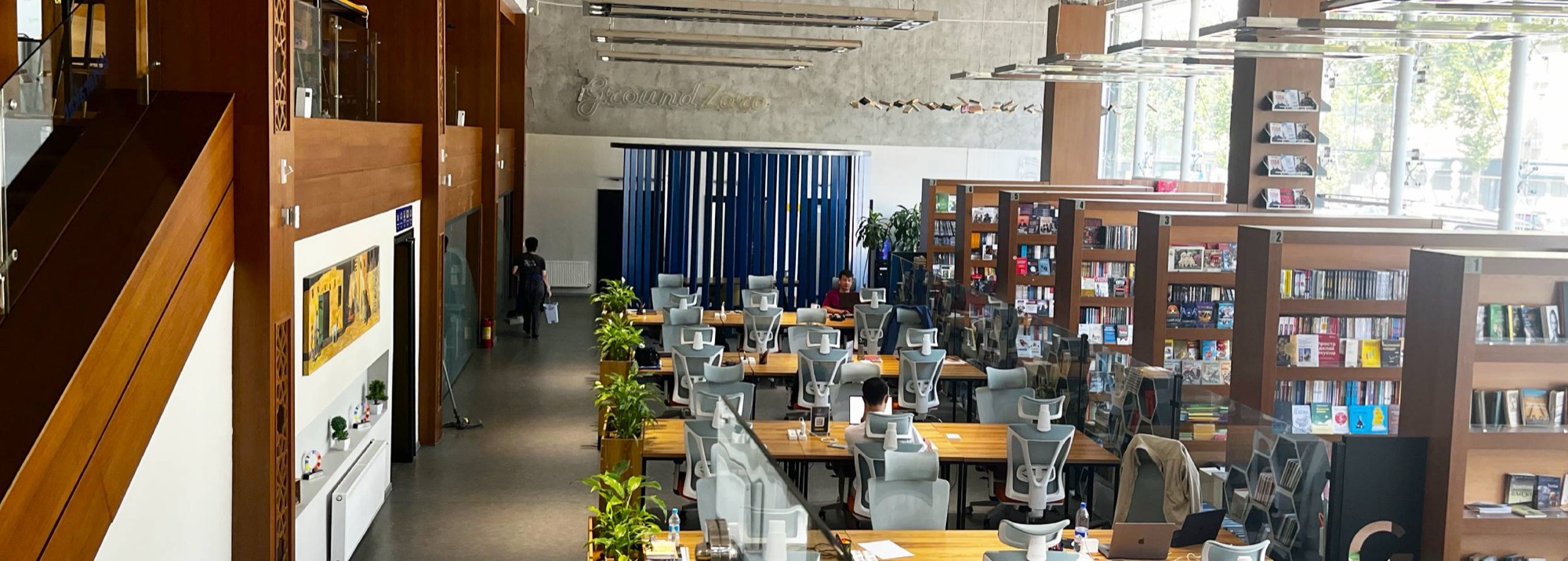
Split across two floors, the main open coworking space is placed in a spacious, open-plan space with around 30 large desks and quality office chairs, with double-height windows making it bright throughout the day. There's a bookshop adjoined to the space which felt like it was there as much for the aesthetic quality as it was for any real commercial gain.

A monthly pass costs around £100 and gets you access 24/7, a seat in the open space and use of one of the lockers. The space is exceptionally well kitted out - there's a small gym, a relaxation area with space to sleep in, dedicated phone booths and a small kitchen space. There are plenty of spaces to take calls on sofas dotted around the place.

You also get 4 days a month to use at any of their other sites. I briefly checked out their site at 'Minor' and whilst well kitted out, it featured none of the natural light and openness which made Kitob Olami such a pleasure to work from. There's another site at 'Sharq' which I didn't make it to but didn't feel as set up for coworking.

The staff at the front desk are exceptionally friendly and welcoming and a team of cleaners keep the entire building impeccably clean around the clock.

I'd arrive at around 09:30 daily and was usually one of the first people in, with it never getting close to full capacity during the day but with comfortable ambience to keep the day moving along.

The only minor drawback would be some particularly poor coffee from the in-house café, but there are a number of better options within a 10-minute walk.

Hourly, daily and weekly passes are available, making it a perfect option no matter how long your stay.

Mustaqillik Ave 6, 100050, Tashkent, Uzbekistan

Food & drink

Coffee

Specialty Coffee Alliance Uzbekistan

Whilst this looks nothing like what you'd expect a speciality coffee shop to look like, it's potentially your best option to pick up some quality coffee in the city. Large selections of quality beans, roasted locally at very competitive prices. Friendly and knowledgeable staff, perhaps the only people who understood what an Aeropress grind should resemble.

Dosan 2

Top ratedLaptop friendly

Within a 10-minute walk from the Ground Zero coworking space, this was my daily go-to coffee shop. Alongside two espresso blends, they have 4 specialty filter coffees, complemented by an in-house bakery with a particular focus on croffles. Popular space for locals to be working from with some desks ideal to work from. Particularly friendly and sweet staff.

Food

Mar mar sharq taomlari

An ideal place to sample a range of Uzbek cuisine with a particular focus being on shashlik, with some enormous grills on display as you enter the restaurant. Friendly staff, relatively plush surroundings and incredible value by global standards.

Cafe Dietka

The thought of a hearty beef goulash may not be what you're craving on a 40-degree summer's lunchtime, but this old Soviet restaurant is an interesting place to pick up a range of traditional meals, set in surroundings which make it the most formal cafeteria I can recall setting foot in.

Mannam

Top rated

Korean restaurant a little out of the centre but well worth the 20-minute walk from Akay City. Some of the most authentic Korean food I sampled in the region, with a large menu of Russian and European items also. Has a large outdoor seating area so it's a perfect place to head in the early evening. Well-stocked beer selection also. Could particularly recommend the bulgogi.

Basri baba

Top rated

Some of the best Turkish food I sampled throughout my time in Central Asia. Impressive range of kebabs, soups and salads. Particularly attentive service in a moderately fancy setting.

Off the clock

Off work

Visit Samarkand

Visit Samarkand

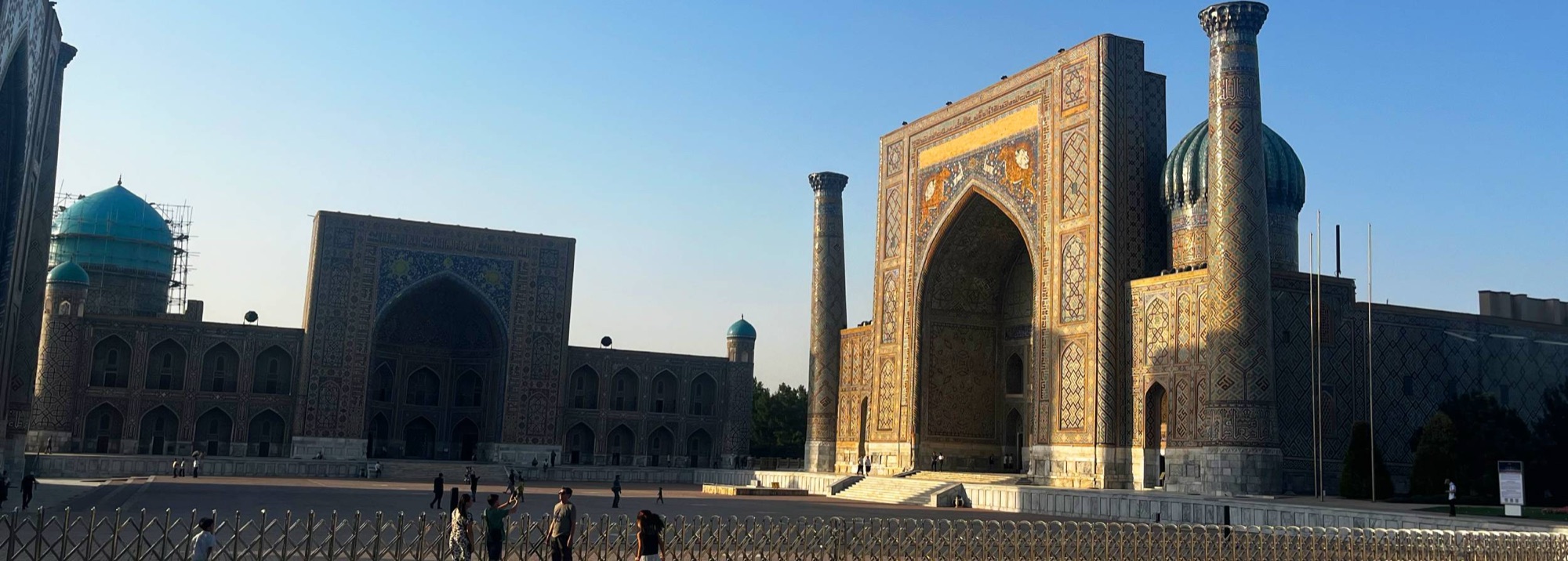
Around a two-and-a-half hour ride away on the high-speed rail line, Samarkand is one of Central Asia's oldest continuously inhabited cities, founded between the 8th-7th centuries BC and serving as a crucial Silk Road trading hub.

The city became renowned as an Islamic centre for scholarly study with landmarks like the Registan Square and Shah-i Zinde mausoleum complex showcasing some of the finest Islamic architecture in Central Asia.

Most of the sites cost a relatively small sum to enter, with the best views coming just before sunset as the shadows start crossing their façades.

24 hours in the city was more than enough for me. Away from the historical core, Samarkand exists as a relatively large city, but has a distinctly local feel. You'll struggle to find anything resembling quality coffee options or coworking spaces and it even makes Tashkent feel like an energetic place.

Dip in and out to see the sites, but by no means a place to work from.

Exercise

Run

Canal Run

A route I repeated at least once a week throughout my stay there. I'd recommend getting a Yandex to the Minor Mosque and then running south along either side of the canal where you pass through some of the beautiful green parks of the city centre. It's around an unobstructed 3-mile run down to the large development at Seoul Mun where it gets a bit more challenging to run.

Run

Ekopark

Convenient, well-landscaped park close to the city centre with a running track looping around a lake with several restaurants and cafés. If intending on doing some serious runs, better to go in the early mornings as the running tracks get overwhelmed with families going into the evening.

Run

Yashna

Situated next to the Tashkent Zoo, this park is an ideal place if looking to do some serious miles. There are a number of sparsely populated routes going around the park, with some trail paths also. Much better than what the images on Google Maps may allude to. Small, nominal entrance fee, so bring cash with you.

Walk

Tavaksay canyon

From what I could gather on Google Maps this was the closest form of hike you could find to the centre of Tashkent. You can get a taxi to the town of Tavaksay and follow the paths up through small villages and eventually get up to the waterfall at Tovoqsoy sharsharasi. Would exercise caution near the waterfall due to encountering several rather aggressive wild dogs. In all honesty, aside from some beautifully sparse landscapes, not worth the effort.

Walk

Japanese Garden

The park was created in 2001 on the initiative of the Japanese Embassy, with the artificial lake located in the park created in 1941 by Japanese soldiers who were in captivity during World War Two. Styled as a calm, urban oasis, it's a popular place for sunset walks with some great views across the lake. Bring some change for the small entrance fee.

People

I have only positive things to say about the people I encountered in Tashkent. Even though English may be spoken sparsely, I felt a great deal of courtesy and warmth throughout all my day-to-day interactions. This stood out in contrast to my time in Kazakhstan, where interactions often felt more reserved.

Similar to Almaty and Bishkek, Tashkent features a mix of Uzbeks and ethnic Russians. The Uzbek identity felt more pronounced here than in the other cities, with greater use of the national language compared to the heavy prevalence of Russian in Almaty.

Anecdotally, there seemed to be less of a clear divide between native Uzbeks and Russians than what I observed elsewhere. Interactions appeared more integrated, with less visible ethnic separation in public spaces and social settings.

I didn't encounter any other remote workers during the month I spent in the city. However, you are likely to come across more traditional tourists using Tashkent as a short stop before heading on to Samarkand or Bukhara.

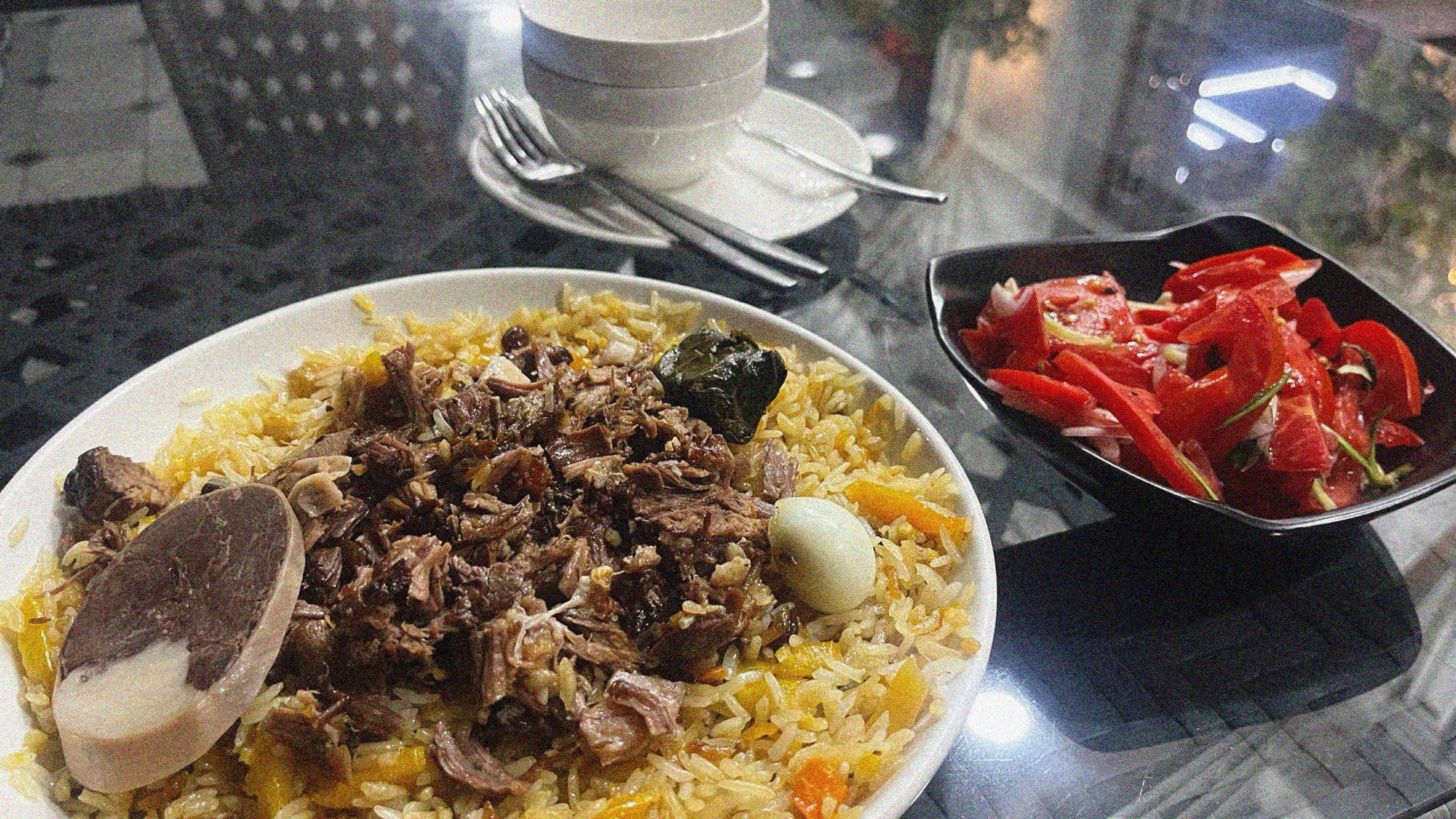
No trip to Uzbekistan would be complete without sampling the national dish, plov. In truth, I couldn't detect any differences between the varieties I sampled elsewhere in the region, but 'Plov City' felt as good a place as any to sample it. Expect oily rice cooked in tail fat, carrots, currants and some lamb or beef placed on top. Unless you are intending on acquiring some serious mass, you should probably avoid daily consumption. If you are wondering what the large circular item is, no its not bone, it's horse.

Notes

Positives

Quality landscaping and infrastructure.

Tashkent is a well put together city. You can tell there has been significant investment put into the landscaping and irrigation of public spaces to ensure it doesn't turn into yellow, scorched earth by midsummer. In particular, the Memorial to the Victims of Repression in Tashkent, the Japanese Garden and the National Garden are standout places to visit.

Day-to-day costs.

Assuming you are earning in a foreign currency, Tashkent is generally great value. Eating out, taxis, coffees are all well below what you would expect to pay in the West. There are a few notable omissions with imported goods, but you're likely to not have to pay too much attention to your bank balance.

Friendly people.

Across the couple of months I've spent in Central Asia, I felt the warmest of receptions from the Uzbek people. Even though there's limited use of English, I felt a warm, genuine curiosity about why you'd chosen to visit their country. I'll remember plenty of warm, jovial interactions from the people I met in daily life across the coworking spaces, gym and coffee shops.

The weather.

The 40-degree heat sounds oppressive on paper, but with next to no humidity, I found it surprisingly manageable. There are a couple of hours during the mid-afternoon where you probably don't want to be lingering for too long outside under the direct sun, but it never felt overbearing. I ran in the evenings when the temperature was in the high 30s with next to no problems. Infinitely more pleasant than, say, London when it reaches the high 20s.

Negatives

Layout of the city.

Tashkent has something of a bizarre layout. What you would deem as the very centre around Amir Timur Square appears to be mainly filled with administrative and educational facilities with a sparse selection of some restaurants and commercial activity around Bukhara Street. This leaves the core of the traditional urban environment spread across numerous roads with small hubs of activity around metro stations. Around Ming O'rik, Minor and Buyuk Ipak Yuli you have glimpses of activity, but not in a size or scale that make them interesting places to visit. The City Mall is relatively decent as far as shopping complexes go, but even that is isolated next to a new commercial development that is a ghost town at the weekends. If you head over to the area near the historic Chorsu Bazaar then it begins to feel like you've lost all association with the 21st century, with the shiny modern sheen of the city firmly worn off.

Lack of bars.

Tashkent does have bars, but they tend to be dispersed all across the city with nowhere having a critical mass of them to create any form of buzz or excitement in the evening. Zero ‘vibe’ per se. I love getting a solitary beer after work, but this was something entirely absent from my daily routine. There are a few hookah lounges which act as something of a replacement, but even they are spread thinly. The country is evidently more conservatively Muslim than other neighbouring countries and whilst alcohol is consumed freely with no shortage of off-licences, it hasn't become a part of public life. At the risk of dwelling on this for too long and sounding like an alcoholic, in isolation this is not an issue. But it compounds with several of the other issues mentioned to generate this somewhat subdued feeling.

Very expensive gyms.

Gyms are bizarrely expensive in Tashkent. This Reddit thread attempts to explain the likely reasons why. I paid around £55 for a morning-only membership in a gym that resembles the poor end of a London council-owned BETTER setup. If you are just passing through, you may want to opt for one of the outdoor calisthenics parks. These weren't "foreigner getting scammed" prices - just a weirdly underdeveloped industry in the country.

Detached from any compelling nature.

A major factor in why I loved Almaty and Bishkek was the proximity to the mountains. There is no real equivalent in Tashkent. One weekend I headed out to the canyon at Водопад Таваксай and ended up getting chased by some particularly wild and aggressive dogs. This lack of immediate access to nature would be fine if the city was a riveting, exciting place in itself, which it unfortunately is not. You can of course travel more widely across the country, but I often like to take my weekends as they come, with little preparation.

Horrific drivers.

Tashkent is home to some truly horrendous drivers. I've never heard so many continuous wheel skids. Each traffic junction feels like a scene from the Fast & Furious franchise, with one of the country's many Chevrolets flooring it with immense urgency. It would be gravely dangerous to assume any form of priority at road junctions because of a green pedestrian light at a crossing. Cars undoubtedly rule the streets in Tashkent. The police operate manual junction signals during peak hours, which further compounds the confusion in terms of right of way.

The paper notes.

Tashkent was one of the few places across the world where I've defaulted to using cash in day-to-day transactions. Within 24 hours I had enough failed attempts with Apple Pay and a physical debit card that I just gave up and would take out 300,000 som every couple of days (£18). The wads of notes are somewhat impractical to carry around, particularly the 2,000 notes clogging up your wallet.

Tips

1,000 SOM notes seem rare.

The smallest thousand som note is one of the worst banknotes I have seen globally, typically resembling an old tissue. Shops will frequently not have them in stock and may give you a small sweet in lieu of the correct change.

Pick up a physical SIM card at the airport.

In the arrivals hall there are numerous SIM card providers, I picked up a 200GB one-month plan for around £5. The registration was swift, with my data plan up and running before my baggage even came out onto the belt. I had no issues with my uCell plan over the course of the month across the country.

Use cash as your main money source.

In larger stores and more modern restaurants they generally can work, but I found it was just not worth the friction. Thankfully ATMs are available everywhere and the withdrawal fees cost around 40p a transaction.

Mentions of Abdukodir Khusanov are warmly received.

The Manchester City defender is the first Uzbek player to grace the Premier League and any reference to him in conversations with locals is likely to be met with a particularly enthusiastic reception.

If looking for a barber, head to the ground floor of Akay City.

The barbershop itself doesn't actually appear on Google Maps but is hard to miss and has a solid selection of barbers. A men's cut costs 2,000 som.

Planning a trip to Tashkent?

Partners I recommend. Some of these links give you a discount, and I may receive a referral reward.

SafetyWing

Specialised, flexible insurance for prolonged trips away.

  • Buy while abroad
  • Global coverage
  • Simple, online claims process
  • 24/7 human support

For trips exceeding 30 continuous days, seek dedicated travel insurance. Most holiday policies or credit card offerings become invalid after 30 days, despite advertising year-round protection. SafetyWing provides medical and travel coverage specifically designed for remote workers.

Having successfully claimed through their platform with impressive speed, I confidently recommend their service.

Sign up and get $20 off

Learn more

Airarlo

Easy access to data on your phone wherever you are in the world.

Get $2.50 off your first purchase

Learn more

Western Union

A convenient alternative to high ATM fees or carrying around cash.

Register and earn £10

Learn more

Suggestions or improvements?

If there's anything you feel that could make these guides more useful, let me know.
Leave a comment

Say hi!

If you've got any questions on any of the destinations or in remote work in general, give me a shout on LinkedIn.
Get in touch

Take every guide with you

The free iOS app has every guide offline, live weather and local time, costs in your currency, and bookmarks for your shortlist.